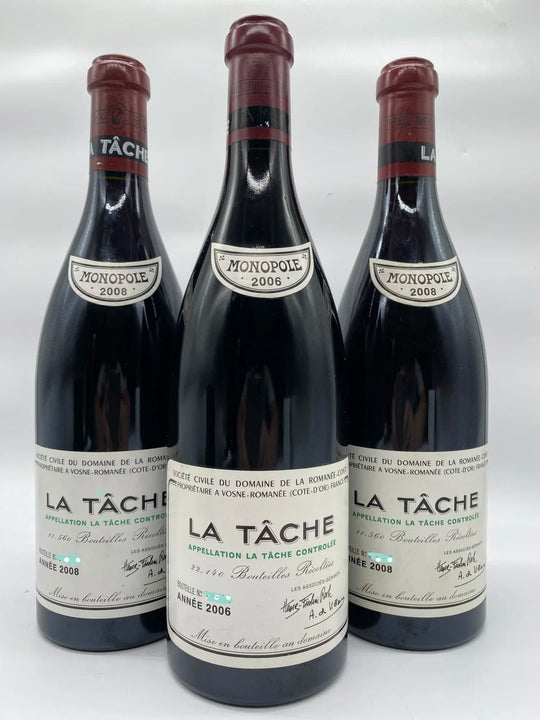
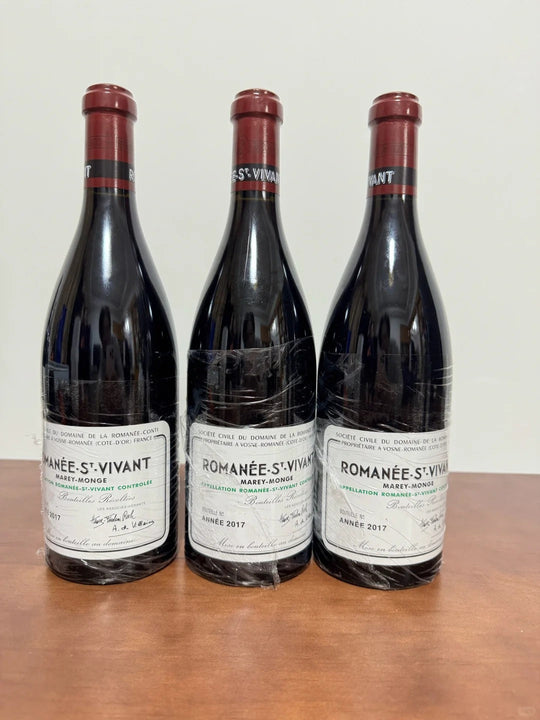
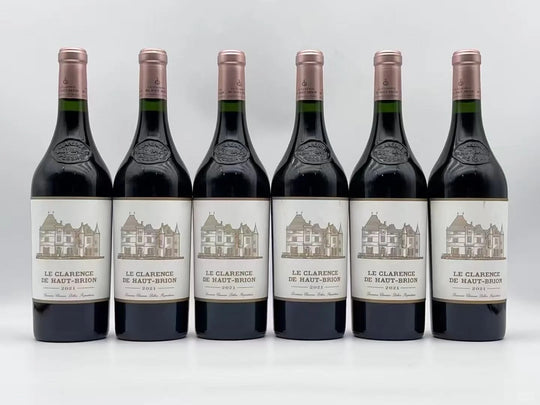
Domaine Leroy and DRC in 2026: Scarcity, Source Prices and Bottle Evidence
At the top of Burgundy collecting, the source compares Domaine de la Romanée-Conti (DRC) with Domaine Leroy as a rare peer. Dibao Wine says that in...

In This Article
If Domaine de la Romanée-Conti, linked here as DRC, is often treated as Burgundy's benchmark, the source presents Domaine Leroy, here shortened to Leroy, as a rare peer, sometimes performing more strongly in particular vintages. As a fine-wine review business, Dibao Wine says its 2026 secondary-market experience found strong interest in Domaine Leroy's estate-bottled red-wax wines. The source's 'liquid gold' and appreciation language is editorial and does not establish future performance.
This article reviews Domaine Leroy's history, source-provided 2026 market references and bottle checks, offering a documented Domaine Leroy resale-price framework rather than investment advice.
1. Domaine Leroy and Lalou Bize-Leroy
Domaine Leroy's history is closely associated with Lalou Bize-Leroy. She was a co-manager of DRC before concentrating on her own estates. The source links her approach with Biodynamics and biodynamic farming and extremely low yields, elements it uses to explain the wines' intensity and terroir expression.
1. Distinguishing the red-wax and white-capsule wines
In a fine-wine review, the source first distinguishes Domaine Leroy (red wax, estate fruit) from Maison Leroy (white or foil capsule, négociant wine). Bottle appearance and exact labelling should be checked rather than relying on colour alone.
- Domaine Leroy (red wax): the source describes estate-vineyard production as very small and highly followed in the secondary market; its resale prices still vary by wine, vintage, condition, date and provenance.
-
Maison Leroy (white or foil capsule): the source describes these as négociant wines with different secondary-market liquidity and prices from the Domaine bottlings. Quality and demand remain wine-specific.

2. Low production and the source's scarcity argument
Some Domaine Leroy Grand Cru parcels are described as producing only a few hundred bottles a year. The source says total Domaine Leroy auction turnover repeatedly exceeded one million pounds, approximately HKD 10 million (expressed in the source as HKD 1,000 × 10,000) or more, from late 2025 into 2026, but gives no auction house, date range or lot data. The figure is retained as an unverified source claim, not proof of value retention.

2. The source's view of the 2026 Domaine Leroy market
The source says that after the 2023–2024 correction, fine wine entered a gradual recovery in 2026 as interest rates declined. No index or rate series is supplied, so this is a market interpretation rather than a confirmed cycle.
1. Claimed correction and recovery in 2026
The source says average fine-wine price declines slowed in 2025 and volume improved before prices, with Domaine Leroy recovering faster than Bordeaux First Growths. No underlying dataset is supplied, so relative performance is not verified.
2. Asia and Hong Kong
Hong Kong levies no wine duty and remains an important trading centre. The source says some Asian ultra-premium buyers favour Domaine Leroy Grand Cru parcels with clear provenance; it provides no buyer or transaction sample.

3. Source-provided Domaine Leroy reference table for April 2026
The source labels the following table as based on international and Hong Kong secondary-market data from April 2026; it also describes April as the 4th month of 2026. Because no retrievable dataset or valuation date within April is supplied, the figures are retained as source references rather than current offers.
Source-estimated Hong Kong resale ranges for selected Domaine Leroy wines (HKD)
| Wine Name (Red Label Series) | Grand Cru/Premier Cru | Reference for Authoritative Ratings | Source 2026 retail reference | Source resale reference (HKD) | Source market-interest label |
|---|---|---|---|---|---|
| Chambertin | Grand Cru | 99-100 | HKD 180,000+ | HKD 145,000 - 160,000 | Source label: extremely high |
| Richebourg | Grand Cru | 98+ | HKD 120,000+ | HKD 95,000 - 110,000 | Source label: very high |
| Musigny | Grand Cru | 100 | Source label: exceptionally high and scarce | Individual review required by vintage and condition | Source label: core collectible |
| Romanée-Saint-Vivant | Grand Cru | 98 | HKD 95,000+ | HKD 75,000 - 85,000 | Source label: stable |
| Vosne-Romanée 1er Cru | Premier Cru | 95-97 | HKD 45,000+ | HKD 35,000 - 40,000 | Source label: potentially faster to place |
Note: the source converts at 1 GBP ≈ 10 HKD and 1 USD ≈ 7.8 HKD. Any actual assessment depends on date, label integrity, ullage, exact wine, vintage and provenance documents.

4. Bottle checks for a Domaine Leroy assessment
The source describes red-wax Domaine Leroy as physically sensitive and says condition can materially affect resale prices. Dibao Wine would review the following three factors:
1. Provenance and storage evidence
For 2026, temperature-controlled cellar records, including Hong Kong bonded-warehouse documents where applicable, or original purchase records can support provenance. They do not ensure a quote near a market high.
2. Ullage and seal condition
The source expects older bottles at into-neck or top-shoulder fill and says cracked red wax or seepage may result in a discount above 20%. This percentage is source guidance, not an automatic formula.
3. Label integrity
Cellar humidity can contribute to light mould, while serious tears or staining may reduce presentation value. The effect depends on the individual bottle and buyer.

5. Dibao Wine's proposed review process
The source describes Dibao Wine as a Hong Kong, Macau and Taiwan fine-wine review business with experience in top wines. The process should still be documented for each Domaine Leroy bottle.
- Initial photographic review: send front-label, back-label, red-wax and fill photographs by WhatsApp. The source states 15 min.; this article does not adopt that fixed timing or a predetermined price outcome, and any indication requires dated comparable evidence.
- Inspection, privacy and payment: an on-site visit may be available in Hong Kong. Cash, FPS or bank transfer, privacy arrangements and actual arrival timing are agreed before handover.
- Authentication evidence: equipment and experienced reviewers may help identify inconsistencies, but no visual or micro-feature check alone proves a bottle or its contents.
Conclusion
The source calls 2026 an important year for reorganising fine-wine assets. Owners holding Domaine Leroy, Domaine de la Romanée-Conti (DRC) or other Grand Cru wines should use current evidence and their own objectives rather than assume that a recovery makes this the best time to sell for profit.
Related Burgundy reading
- Related reading from this Domaine Leroy guide: a Dibao Wine case involving the reallocation of rare Leroy and DRC bottles. Adds context on Domaine de la Romanée-Conti vintages, bottle condition and secondary-market interest.
- Comparison reading from this Domaine Leroy guide: Domaine Leroy and DRC liquidity context for leading Burgundy Grand Crus. The source repeats Domaine de la Romanée-Conti on both sides of this comparison; use the linked article only as additional Burgundy context.
- Same-region reading from this Domaine Leroy guide: why Chambertin and Musigny from Domaine Leroy attract buyer interest beyond DRC. Provides a cross-reference for assessing a Burgundy collection.
- Valuation supplement to this Domaine Leroy guide: a Dibao Wine case involving a six-bottle Leroy Chambertin and DRC Montrachet handover. Provides a transaction-case perspective on the market article; it is not a valuation of another collection.
Send label, vintage, volume, capsule and fill-level photos. Di Bao Wine will review the visible condition and current demand.