Château Ausone: Source 1,500-Case Scarcity Claim and Bottle Evidence
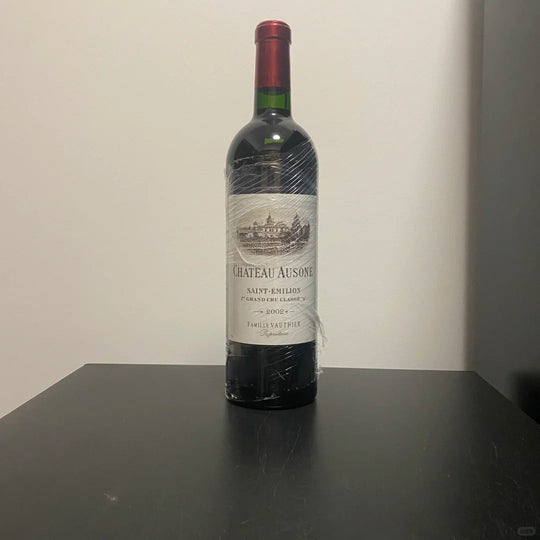
Château Ausone is a small-production Saint-Émilion estate. The source gives annual output of about 1,500–2,000 12-bottle cases, compared with rough...

In This Article
Within the top tier of Bordeaux, the source contrasts Château Lafite Rothschild’s broad international recognition with the much smaller production of Château Ausone in Saint-Émilion.
Dibao Wine says its 2026 buying experience places Ausone among the most premium Saint-Émilion names. The source gives annual production of about 1,500–2,000 12-bottle cases, compared with roughly 15,000–25,000 cases (1.5–2.5 × 10,000) for some Left Bank First Growths. It provides no production-year citations or complete quote series.
Why does the source call Ausone one of the Right Bank’s scarcest wines, and what evidence may affect a bottle-specific review in 2026? This guide separates the source’s market thesis from condition and provenance checks.
1. Château Ausone: History on the Limestone Slope
The source links Ausone’s reputation to its site, family history and limited production rather than to modern marketing alone.
1. A Name Associated with the Roman Poet
The source traces the estate’s history to the Roman period and its name to the poet Ausonius, associated with Saint-Émilion. It says the 11th generation of the Vauthier family manages the estate and attributes consistency to that continuity; no historical or production citation is supplied.
2. About 7 Hectares
The source places Ausone’s vineyard at about 7 hectares on steep limestone slopes in Saint-Émilion. It links the site with mineral character and precise acidity, and limited land with low output. Those general descriptions do not establish scarcity, demand or value for an individual bottle.

2. Withdrawal from the Classification
The source notes that Château Ausone and Château Cheval Blanc withdrew from the 2022 Saint-Émilion classification process.
It says both estates believed the new criteria gave too much weight to social-media reach, wine tourism and marketing and too little to terroir and ageing quality. This is the article’s account of their decision; the underlying statements are not cited here. The source claims Ausone’s price and reputation did not suffer after the withdrawal and that its independent image strengthened. No matched pre- and post-withdrawal price or demand series is provided.

3. Source 2026 Market References
The source describes a structural fine-wine recovery in 2026 and presents Ausone as a leader because of scarcity. It supplies no complete index, comparison set or dated transaction series.
1. Core-Vintage Rebound Claim
The source says Ausone 2010 rose 20.9% in 2025. It gives no index, start and end prices, currency, condition mix, trade count or fees, so the figure is context rather than proof of a repeatable rebound.
2. Source “Alpha” and Buyback-Ratio Claim
The source says perfect-score vintages such as 2000 and 2005 may receive quotes near 85% of retail, compared with 60%–70% for other estates. No matched quotes, fees, bottle conditions or transaction dates are supplied; those ratios are not current offers.
3. Source Hong Kong References for Core Ausone Vintages (2026)
Note: the source converts figures at the July 2026 exchange rate of approximately US$1 = HKD 7.8. References are not offers and depend on vintage, format, fill, label, capsule, seepage, provenance, storage evidence, date and fees.
| Vintage | Source Parker Rating (RP) | Source 2025 Secondary-Market Retail Reference per 12-Bottle Case | Source Fine-Wine Review Reference per Bottle (HKD) | Source Liquidity Description |
|---|---|---|---|---|
| 2000 | 100 | US$10,390 (about HKD 81,042) | HK$6,084 - HK$6,630 | The source calls the millennium vintage rare. |
| 2005 | 100 | US$12,690 (about HKD 98,982) | HK$7,410 - HK$8,190 | The source calls it a leading vintage with strong secondary-market interest. |
| 2009 | 100 | US$9,290 (about HKD 72,462) | HK$5,304 - HK$5,850 | The source describes maturity and stable demand. |
| 2010 | 98 | US$9,230 (about HKD 71,994) | HK$5,460 - HK$6,084 | The source describes a firm structure and a visible 2026 rebound. |
| 2015 | 100 | US$6,700 (about HKD 52,260) | HK$3,744 - HK$4,290 | The source cites a perfect score and long-term appreciation potential; future value is uncertain. |
| 2016 | 99 | US$6,130 (about HKD 47,814) | HK$3,510 - HK$4,056 | The source describes purity and frequent auction trading without supplying trade counts. |

4. Bottle Review: Evidence That May Affect an Ausone Quote
The source says Ausone is sensitive to storage and highlights the following factors. They do not establish a maximum price.
- Fill Level (Ullage): For younger Ausone bottles, the source expects an into-neck fill and says a lower-shoulder fill may reduce a quote by more than 20%. It provides no matched deduction schedule.
- Label Condition: Insect damage, major tears or water staining may reduce presentation and gift appeal. Label condition does not establish authenticity or internal wine quality.
- Provenance: Storage records from a professional or bonded cellar and original purchase receipts may reduce provenance uncertainty. They must be checked and do not authenticate a bottle by themselves.
-
Original Wooden Case (OWC): An intact OWC may support provenance and presentation. The source says a full case often receives a stronger quote than loose bottles, but supplies no matched premium evidence.

5. The Source’s 2026 Hold-or-Sell View
The following statements reproduce the source’s dated 2026 market opinion. They are not investment advice or forecasts.
- Source “hold” view: for Ausone 2000 and 2005 , the source suggests continued holding and predicts another valuation cycle around 2027 as liquidity improves. It provides no model or transaction evidence; prices and liquidity may fall.
-
Source “sell” view: for 2010 or 2016 , the source calls current conditions favourable after gains in the second half of 2025 and claims vertical collections with clear provenance receive strong premiums. No matched completed-sale evidence is supplied.

Conclusion
The source links Ausone’s premium to terroir and low production, citing about 1,500 cases a year. Production alone does not establish an asset value, sale outcome or future return.
Dibao Wine — Fine-Wine Bottle Review The source says the business has worked in the Hong Kong and Macau secondary market for years and uses an internationally informed older-bottle review process for Ausone, Cheval Blanc and other selected Right Bank wines.
- Quote evidence: ask for the date, comparable bottles, condition adjustments, fees and net amount in writing before accepting a quote.
- Transaction arrangements: confirm identity, privacy handling, payment method, cleared funds, transport and handover timing before releasing bottles. Cash, FPS or bank transfer may be discussed for the exact transaction.
- Initial review: clear WhatsApp photographs may support a preliminary, non-binding review. Any Hong Kong or Macau visit depends on current scope, availability and prior agreement; there is no fixed response or settlement time.
👇 Owners can send exact bottle details for a dated Ausone review.
- Business name: Dibao Wine
- WhatsApp: (852) 96737259
- WeChat: Sam96737259
Photograph the front label, back label, capsule and fill for an initial review. Physical inspection and provenance checks may still be required.
Send label, vintage, volume, capsule and fill-level photos. Di Bao Wine will review the visible condition and current demand.