Château Haut-Brion in 2026: Vintage and Sale-Window Review
Dibao Wine—the brand rendered literally as ‘Empire-Castle’ in the Chinese source—often hears the question: is this a good time to sell a Bordeaux F...

In This Article
Dibao Wine—the brand rendered literally as ‘Empire-Castle’ in the Chinese source—often hears the same question from collectors: is this a good time to sell a Bordeaux First Growth? The source places the market at a delicate turning point after a three-year correction from its October 2022 peak. It cites a 3% rise in the Liv-ex 100 over the six months to the end of January 2026 and five consecutive positive months. Those are dated source references; a current review should confirm the index period before drawing a recovery conclusion.
Against that source-market backdrop, Château Haut-Brion is the only one of Bordeaux's five First Growths in Graves, within Pessac-Léognan, and is presented here as the oldest of the five. Château Haut-Brion shows why vintage, condition, provenance and current bids must be compared bottle by bottle. This article examines the source's proposed 2026 selling windows without treating any one vintage as having a dependable exit point.

1. The Source's 2026 Fine-Wine Market and Sale-Window Logic
A fine-wine sale window is not simply a price peak: drinking maturity, confidence, liquidity and regional demand all matter. The source reports that January 2026 Liv-ex trade value and volume rose by 21.7% and 27.9%, respectively, from the previous month and attributes the increase to buyers in the UK, the US and Asia around Lunar New Year. The figures and buyer attribution are preserved as source claims; the official Liv-ex Q1 summary reviewed for this repair does not verify those exact percentages or that causal split.
Château Haut-Brion's 51-hectare vineyard is described here as deep gravel over clay and sand, a terroir associated with ageing capacity and notes of smoke, crushed stone, cigar box and woodland. The source also says the market rebounded from a September 2025 (2025-09) low and became more drinker-led. In March 2026 (2026-03), disruption around the Strait of Hormuz coincided with a sharp rise in oil prices and wider market volatility. That event is relevant macro context, but it does not by itself show that capital moved into wine or that Haut-Brion premiums and demand rose; contemporaneous, wine-specific transaction data would be needed for that conclusion.

2. Classic Vintages: Source Liquidity and Hong Kong Market References
Vintage reputation is one input in a wine review. For Haut-Brion, the source places 1989 and 1982 among its leading modern classics; the bottle's condition and provenance still determine whether that reputation is reflected in an offer.
1. 1989: A Source Benchmark Vintage
The source portrays 1989 Château Haut-Brion as highly liquid in 2026. It recalls Bordeaux's hot, dry season and the earliest harvest since 1893, attributes a 100-point score to Robert Parker, and describes scorched earth, liquid mineral, graphite and blackcurrant-jam notes. The score and tasting language are retained as attributed source material rather than a new critical assessment.

- Source Sale-Window View: The source places 1989 in a strong drinking window through 2040 or beyond and says it ranked among the ten most actively traded wines in January 2026. It gives an original-case reference of US$27,560 for 12x75cl, converted at the source's exchange rate to approximately HK$214,968. The source strongly favours a sale for collectors seeking liquidity, but any decision still requires current, like-for-like bids and a review of condition and provenance.
2. 1982: A Mature Classic and Bottle-Specific Sale Review
By 2026, the 1982 vintage was 44 years old. The source notes that poorly stored examples may show low-shoulder fill or cork seepage, while sound bottles can retain cedar, leather and silky-fruit character. Those condition differences make bottle-level inspection essential.

- Source Sale-Window View: The source gives 1982 a 2026-2040 drinking window and says tertiary aromas and scarcity now shape its appeal. It cites an original-case market reference of US$10,130, approximately HK$79,014. Dibao Wine's source article calls 2026 a possible time for a strategic reduction in an excellent-condition 1982 holding; this is a review prompt, not a universal sale instruction.
3. Revaluation Cases from the 21st Century: 2000, 2005, 2009 and 2010
For collectors with a medium- or long-term horizon, the source assigns different 2026 sale prospects to four Haut-Brion vintages from the first decade of the 21st century. The labels below are its market thesis, not promised outcomes.
2026 Source Comparison of Core Château Haut-Brion Vintages
Note: the source converts prices at 1 USD ≈ 7.8 HKD. Any actual Hong Kong indication depends on the observation date, bottle condition, storage, provenance and completeness of the original wooden case (OWC).
| Vintage | Highest Source Rating | Source 2026 Market Average (12x75cl) | Source Conversion to HKD | Source POP Score (Price per Point) | Source Drinking Window | Source Sale-Window Label |
|---|---|---|---|---|---|---|
| 2000 | 99 (Parker) | $10,171 | About HK$79,334 | 438.5 | Now-2045+ | Source label: strong high-end dining demand and stable pricing |
| 2005 | 100 (Parker) | $9,397 | About HK$73,297 | 384.9 | 2015 - 2070+ | Source label: entering an initial drinking window and potentially easier to sell |
| 2009 | 100 (Suckling) | $9,166 | About HK$71,495 | 375.4 | 2020 - 2054+ | Source label: modern style with reported Asian-market interest |
| 2010 | 100 (Parker) | $7,180 | About HK$55,944 | 294.0 | 2022 - 2065+ | Source label: strong drinking window and attractive price-per-point ratio |
- 2010: The Source's Relative-Value Candidate The source presents 2010 as one of Bordeaux's great vintages. It cites 14.6% alcohol but says acidity and structure preserve balance, and describes the wine as moving from youth toward maturity in 2026. Its lowest POP score in the comparison is used to argue for value and fast end-user trading. That liquidity conclusion needs dated transaction evidence and should not be inferred from price per point alone.
- 2009: Reported Asia-Pacific Appeal The source describes 2009 Haut-Brion as full, rich and ripe, with black-cherry, charred-wood and espresso notes. It also calls the vintage a stable secondary-market choice in Asia-Pacific; that demand assessment is a source claim requiring current trade evidence.
- 2005 and 2000: The source associates 2005 with elegance, minerality and ageing potential to 2070, while describing 2000 as ‘liquid velvet’ with terracotta and roasted-vanilla notes. It says both saw stable 2026 auction and high-end dining demand, but supplies no dated channel data for that assertion.
4. Source Value Cases Entering Secondary Maturity: 2014 and 2016
The source treats a ‘Ten Years On’ review as a market catalyst for fine-wine collections. It is best understood as a recurring reassessment point rather than an automatic price event.
- 2014: The Source's Understated Balance Case After roughly a decade in bottle, the source says 2014's balance is becoming clearer. It attributes to Neal Martin the view that the wine is approaching secondary maturity, with a 2026-2048 drinking window, and cites a case reference of US$4,820, approximately HK$37,596. The source calls it one of the more accessible First Growth options for a 2026 portfolio review. Accessibility and suitability remain collector- and price-specific.
- 2016: The Source's ‘Lower-Risk’ Label The source attributes a ‘lower-risk option’ label to Liv-ex, places 2016 in its first drinking window in 2026, and cites 100-point assessments from Decanter, James Suckling and Robert Parker. It also gives a market reference of US$5,770, approximately HK$45,006. The source reports rising institutional and high-end dining demand. Without a dated trade series, that statement cannot establish liquidity or a stable sale price.

5. White Wine and Second Label: Source Market References
The source also highlights two Château Haut-Brion wines beyond the grand vin in its 2026 discussion:
- Haut-Brion Blanc: A Rare Auction Wine The source gives a blend of approximately 51.5% Sémillon and 48.5% Sauvignon Blanc, annual production of about 8,000 bottles, a 100-point assessment for 2021 and a secondary-market reference above €790 per bottle, approximately HK$6,636. No critic, tasting date, observation date or comparison sample is supplied for those score and price claims. The source's ‘All White Now’ scarcity-premium thesis for Haut-Brion Blanc in 2026 therefore needs current, like-for-like evidence.
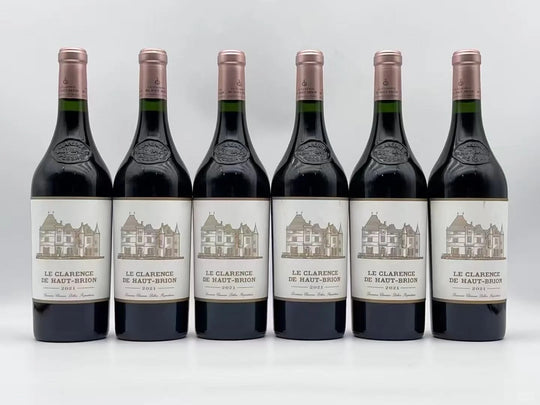
- Le Clarence de Haut-Brion: Second-Wine Liquidity Context The source says some buyers shifted toward leading-vintage second wines in a softer economic environment. It attributes a 100-point Jeb Dunnuck score to the 2010 Le Clarence and argues that its style is close to the grand vin at a lower price. The exact score is not visible on the public critic page reviewed for this repair, so it remains an attributed source claim requiring the original citation; liquidity also requires current trade evidence.
6. Source Regional Preferences and Sale-Review Matrix
The source describes regional differences in the 2026 market. The observations below are useful questions for a current review, but they cannot establish a price-superlative result for Dibao Wine.
- Asian Market (Hong Kong, Singapore): The source says some Hong Kong and Singapore buyers favour 100-point vintages and that 1989, 2000, 2009 and 2016 may trade above a global average. No comparison date, format or dataset is supplied.
- U.S. Market: The source reports a marked 2026 increase in US interest in Bordeaux First Growths and higher buyer participation on Liv-ex. The scale and comparison period are not identified.
- UK/European Market: The source characterises UK and European demand as value-led and identifies 2014, 2012 and 2017 as relatively liquid vintages. Current transactions are needed to test that ranking.
2026 Haut-Brion Source Sale-Review Matrix
| Year Tiers | Source Value Label | Source Liquidity Label | Source Review Prompt |
|---|---|---|---|
| First Tier (1989, 2010, 2016) | Classic benchmark / strong drinking window / source ‘lower-risk’ label | Source label: very high | Source prompt: consider a sale review: The source reports its strongest demand here. A cash indication must still be based on current, comparable bids and bottle evidence. |
| Second tier (1982, 2000, 2005) | Historic collection / mature drinking profile / reported dining demand | Source label: medium-high | Source prompt: consider a strategic reduction: The source associates these vintages with clubs and experienced collectors. Superior condition can support confidence, but no premium is automatic. |
| Third tier (2014, 2017, 2021) | Ten-year review / source quick-sale label / classical style | Source label: medium-high | Source prompt: review relative value and liquidity: The source reports higher turnover. Collectors needing liquidity should compare actual bids rather than assume a quick sale. |
Further Reading for Bordeaux Collections
- Further reading from the 2026 Château Haut-Brion analysis: which vintages are regarded as classics? —additional context on Haut-Brion vintages, bottle condition and market demand.
- Haut-Brion comparison from the 2026 vintage analysis: reviewing 1989 and 2010 bottles and the in-person assessment process —another perspective on Haut-Brion vintage differentiation in the secondary market.
- Same-region reference from the 2026 Haut-Brion analysis: a Bordeaux collection transfer from business dining to personal enjoyment —a cross-reference for assessing Bordeaux collections.
- Valuation supplement to the 2026 Haut-Brion analysis: reading market timing without assuming a perfect exit —Adds market-reference context to the pricing logic behind a case review.
Send label, vintage, volume, capsule and fill-level photos. Di Bao Wine will review the visible condition and current demand.