Understanding Le Pin Prices: Vintages, Scarcity and the Resale Market
Le Pin's wine quality is quite close to that of Pétrus. Although it lacks some of Pétrus's “purity” and concentration, it combines oak and fruit ar...

In This Article
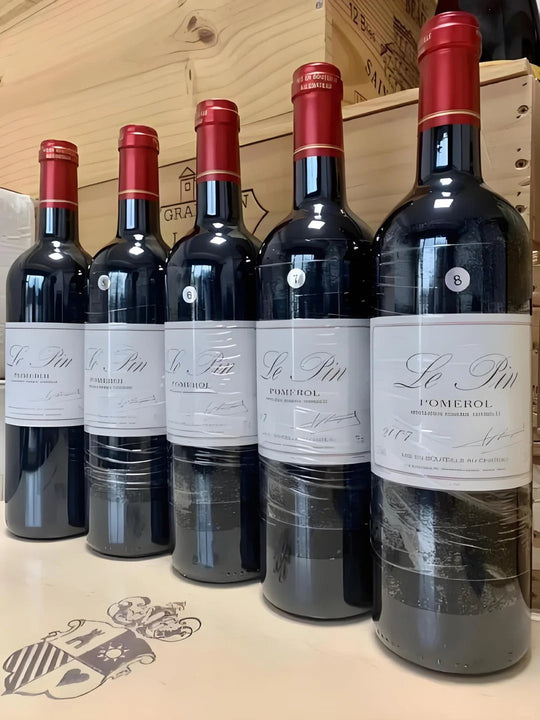
Le Pin's wine quality is quite close to that of Pétrus. Although it lacks some of Pétrus's “purity” and concentration, it combines oak and fruit aromas; a gentle swirl of the glass immediately releases layers of fragrance. The wine is essentially a counterpart to Pétrus, so their aromatic profiles are notably similar.

Although 6000 bottles of Le Pin are released each year, only about 1500 circulate on the market. Around 3/4 of production is sold to the United Kingdom, with only a small quantity reaching the United States, where deliberate speculation drove prices sharply higher. Many in the wine world regarded this as undesirable, so some well-known wine books either ignored Le Pin or mocked it, arguing that articles about the wine merely wasted ink or polished its image to fuel speculation.
Mr Parker once said: “If you wish to indulge purely for fun or pleasure, it would be difficult to find a more suitable bottle anywhere in Pomerol, or perhaps even Bordeaux, than Le Pin, although it is best enjoyed within a 10-20-year drinking window.” Another noted wine writer, Clive Coates, tasted every Le Pin vintage from 1981-1985 and concluded that it still lacked the depth and layers of its eastern neighbour's “old vines,” Vieux Château Certan, even though their prices could differ by as much as 4 times. In the 1994 US market, the 1990 Le Pin was priced at $279 and Pétrus at $450, Château Lafite at $88 and Vieux Château Certan at $53.

Even so, many believed that Le Pin had surpassed its peers. Issue 6 of the German wine bimonthly Alles uber Wein in 1995 reported a “Le Pin Challenges Pétrus” tasting. 10 renowned German tasters and 1 Singapore collector supplied bottles for a blind assessment of Le Pin and Pétrus across 13 vintages—1979-1990 plus 1992. Le Pin prevailed in 9 vintages, including its inaugural 1979 vintage. Its remarkable performance was difficult to deny. In early 1997, the US magazine Wine Spectator scored the 1994 Le Pin and Pétrus at 95 and 93 points respectively, with US market prices of $400 and $375.
Using London wine-market prices from May 2006 as a benchmark, a case of 1996 Pétrus cost £3910, approximately RMB 54,000, while Le Pin cost £3563, approximately RMB 50,000. They ranked first and second among the most expensive Bordeaux wines. Château Lafite and Château Latour were priced at £2500, while Château Mouton Rothschild was far behind at £1086. During the same period, the 2002 Le Pin and Pétrus, both rated 93 points, reached the US market at $700 and $600 respectively, placing them on broadly comparable terms.
Consumers are understandably interested in what Le Pin costs. Because scarcity tends to increase demand, many hope to experience a wine of this quality. Even a less distinguished vintage may be priced at around 20,000 in the domestic market—a level widely regarded as very high.
To apply the Le Pin assessment principles in “Understanding Le Pin Prices: Vintages, Scarcity and the Resale Market” to an actual collection, organise the vintages, bottle counts, fill levels and label photographs, then use WhatsApp 96737259 to request an initial valuation.
Further Le Pin and Pomerol Links
- Further reading from “Understanding Le Pin Prices: Vintages, Scarcity...”: Right-Bank Bordeaux Rivals: A 2026 Secondary-Market Trend Outlook for Pétrus and Le Pin – Adds context on Le Pin and Pétrus vintages, bottle condition and secondary-market demand.
- A Le Pin comparison for “Understanding Le Pin Prices: Vintages, Scarcity...”: [Dibao Wine Purchase Case] A Grand Handover of Three Right-Bank Bordeaux Icons: A 2000 Pétrus, Le Pin and Lafleur Collection... – Helps compare Le Pin with Pétrus and other Right-Bank wines in the secondary market.
- A regional reference for “Understanding Le Pin Prices: Vintages, Scarcity...”: A Pomerol Showdown: Comparing the Secondary-Market Liquidity of Pétrus and Le Pin – A useful cross-reference when valuing a Bordeaux collection.
- Additional valuation context for “Understanding Le Pin Prices: Vintages, Scarcity...”: [Dibao Wine Purchase Case] A Hong Kong Collector Parts with 7 Rare Vintages of Pétrus – Uses an actual handover case to add practical context to the market article.
Further Le Pin Valuation Reading
“Understanding Le Pin Prices: Vintages, Scarcity and the Resale Market” is best read alongside an inspection of the actual bottles. Valuation differences among Le Pin collections are often driven not by vintage alone, but by storage, fill level, label cleanliness and current market demand together.
If a collection related to “Understanding Le Pin Prices: Vintages, Scarcity and the Resale Market” includes a popular Bordeaux estate or a scarce vintage, retain the original case, packaging, purchase records and cellar documentation where possible. These details help buyers establish confidence more quickly and reduce repeated checks before handover.
Valuation takeaway: If a collection includes Le Pin, rare vintages or a complete original case, begin with clear photographs for an initial review before deciding whether to arrange an in-person handover.
Le Pin Collector Decision Notes
Details matter in the secondary market for fine Bordeaux. For a Le Pin topic such as “Understanding Le Pin Prices: Vintages, Scarcity and the Resale Market,” the article can provide direction, but an actual transaction still depends on whether the verifiable records are complete.
| Is it worth holding? | If a collection related to “Understanding Le Pin Prices: Vintages, Scarcity and the Resale Market” is intact and demand remains steady, the owner may first monitor the market. If the cellar arrangement needs to change, an initial valuation may be appropriate. |
| Is it suitable for a bulk handover? | If Le Pin bottles come from the same cellar, series or batch, valuing them together usually makes it easier to establish their full context. |
| Credibility of the quotation | A quotation for “Understanding Le Pin Prices: Vintages, Scarcity and the Resale Market” should explain the estate, vintage, bottle condition and recent demand rather than provide only a general figure. |
Put simply, a Le Pin collection related to “Understanding Le Pin Prices: Vintages, Scarcity and the Resale Market” has a firmer basis for valuation when it combines clear provenance, sound storage and identifiable market demand. If information is incomplete, add photographs and storage details before deciding whether it is suitable for sale.
Send label, vintage, volume, capsule and fill-level photos. Di Bao Wine will review the visible condition and current demand.