2026 Fine-Wine Market Turning Point: Is This a Useful Sale-Review Window?
As a specialist buyer of fine wine, Dibao Wine follows international fine-wine market developments. Owners of Bordeaux First Growths, Burgundy gran...

In This Article
As a specialist buyer of fine wine, Dibao Wine monitors developments in the international fine-wine market. The source presents 2026 as strategically important for collectors and investors after a three-year correction from the October 2022 peak. It describes an early-2026 structural turning point driven by changing macroeconomic policy, geopolitical demand and a new generation of buyers. These are source-period market observations, not a forecast of returns.
If you hold Bordeaux First Growths, Burgundy grands crus or other rare wines, 2026 may be a useful time to review your cellar. This article examines the source's macroeconomic data, auction examples, regional performance and wealth-management thesis without treating any date as an assured selling window.

After three years of deep adjustment, why are high-end wines recovering in 2026?
The source describes a difficult 2023-2025 adjustment marked by inflation, higher interest rates and tighter liquidity. It says prices in regions including Burgundy and Champagne fell 35%-40% from their peaks and approached five-year lows. The article does not identify the index or dates behind each figure, so they should be treated as source-period context rather than proof of a stable 2026 recovery.
For Q1 2026, the source reports that the Liv-ex 100 rose for a fifth consecutive month in January, by 3% cumulatively, while transaction value increased 21.7% month on month and volume rose 27.9%. These figures require the same observation period and Liv-ex definitions before comparison; they do not by themselves establish that buyer confidence was fully restored.
2023-2026 High-End Wine Market Cycle Analysis
| Cycle Stage | Time Period | Core Market Characteristics | Buyer and Seller Market Sentiment |
|---|---|---|---|
| Bull Market Peak | Q4 2022 | High speculative premiums; low interest rates supported demand. | Very optimistic; momentum buying |
| Deep Correction | 2023 - 2024 | Rapid interest-rate increases reduced liquidity; regional prices, including Burgundy, corrected sharply. | Distressed selling and caution |
| Stabilisation | H2 2025 | The source says prices reached a five-year low, bid-offer spreads narrowed and buyers returned to fundamentals. | Cautious optimism; selective value review |
| Early recovery | Q1 2026 | The source reports several months of index gains, greater interest in tangible assets and changing tariff policy. | Selective buying and evidence-based sale reviews |
Two Source Themes: Tariff Policy and the 'Safe-Haven' Thesis
The source identifies two macroeconomic themes behind its 2026 recovery thesis. Neither establishes a bottle-specific price or demand outcome.

First: tariff policy and global liquidity. In February 2026, the U.S. Supreme Court held that IEEPA does not authorize the President to impose the challenged tariffs; it did not issue a general ruling that tariffs are unconstitutional. The effect on wine duties depends on the legal basis and date being considered. Separately, EU-India FTA negotiations concluded on 27 January 2026, but the agreement still required signature and internal procedures. The official prospective schedule would reduce India's wine tariff from 150% to 75% at entry into force and later to 20% for premium wine or 30% for medium-range wine. The UK-India provisions are separate and concern whisky tariffs falling from 150% to 75%, then gradually to 40%.
Second: the source's geopolitical 'anchor' thesis. The source argues that geopolitical tension and supply-chain changes increased interest in fine wine as a tangible asset with a different risk profile from equities. Limited supply and currency diversification may inform a collection review, but they do not make wine a safe haven or ensure inflation protection.
Auction context: Lafite versus DRC and recent record prices
Sotheby's 2025 Wine & Spirits Market Report records global sales of approximately HK$994 million (US$127.5 million), up 12% year on year. The source uses this result as evidence of continuing demand for rare wines, but the annual total does not establish the value or liquidity of an individual bottle.
For the source's Bordeaux-Burgundy comparison, Château Lafite Rothschild and Domaine de la Romanée-Conti (DRC) are compared through a price ratio. The source says roughly 14 bottles of Lafite equalled one DRC bottle in 2013 and that the ratio later approached 29:1. It supplies no matched vintages, formats, dates or dataset, so the ratio illustrates the source's scarcity thesis rather than a usable valuation rule.

For liquidity context, the source gives Château Lafite Rothschild annual production at about 15,000 to 25,000 cases and cites a 12-bottle case of 1982 Lafite at roughly HK$233,000 (US$29,880). These are source-period references rather than a current quotation; format, condition, provenance, sale date and fees must be matched before comparison.
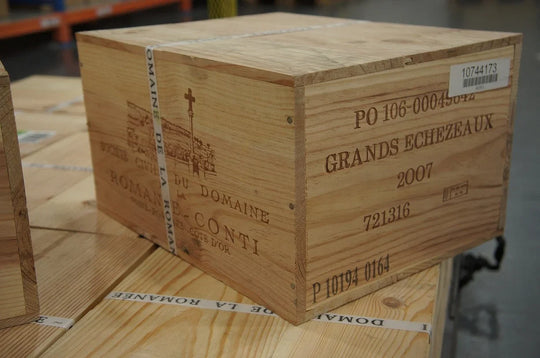
By comparison, the source cites recent DRC records, including one of only 600 bottles produced in 1945: DRC Romanée-Conti sold for about HK$6.337 million (US$812,500), setting a new auction record for a single bottle of wine. The source also cites a 12-bottle case of 1990 DRC at about HK$3.509 million (US$449,890) in Hong Kong. Separately, one 2025 Hospices de Beaune Bâtard-Montrachet Grand Cru, Cuvée Dames de Flandres charity pièce (cask)—not a single bottle—sold for about HK$3.915 million (US$502,027). These exceptional lots are not evidence that resale value is unlimited; each comparison requires the same format, provenance, condition and sale terms.
Wealth-Management Claims Require Context
The source says that 97% of surveyed wealth managers expected stronger fine-wine demand in 2026 and that about one-third of advisers reported some high-net-worth clients allocating 21% to 30% of wealth to fine wine, versus 2% previously. The underlying survey, sample and methodology are not supplied here, so these figures should be treated as source claims rather than portfolio guidance.
The source also cites Knight Frank figures for 2024—art down 18.3% and rare whisky down 9%—and argues that fine wine began recovering earlier. Those figures require the same index, dates and methodology for comparison and do not promise a smoother return path.

Source Q1 2026 Regional Market Outlook
| Regions and Representative Wines | Source's 2026 Market Label | Core Logic and Market Driving Factors | Vintages Highlighted by the Source |
|---|---|---|---|
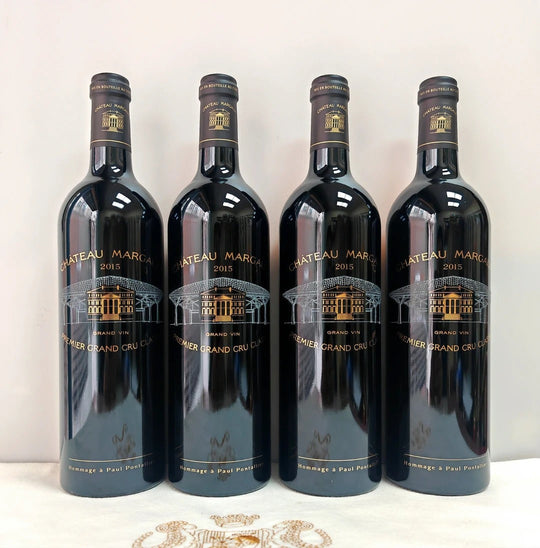
| Bordeaux (Left Bank First Growth) Château Lafite Rothschild, Latour, Margaux | Source label: increase exposure / consider a sale (not advice) | The source describes low valuations and renewed liquidity after U.S. tariff changes. The legal and tariff position changed in February 2026, so the applicable rate and date must be rechecked. | 2005, 2016, 2019 |
| Burgundy (Grand Cru Vineyards) DRC, Leroy, Rousseau | Source label: hold / consider a premium sale (not advice) | The source cites constrained 2024 supply, scarcity and exceptional auction results. Those examples do not establish a price floor for other bottles. | 1990, 1999, 2022 |
| Italy (Super Tuscan) Sassicaia, Masseto | Source label: hold steadily (not advice) | The source highlights relative value, brand strength and comparatively resilient pricing during the correction; no supporting series is supplied here. | 2016, 2019, 2021 |
| Champagne (Vintage and Renowned Producers) Dom Pérignon, Salon | Source label: consider exposure (not advice) | The source says prices stabilised after a correction and that Asian and younger-buyer demand improved. The claim requires a dated dataset. | 2008, 2012 |
Younger Buyers: Source Claims About Transparency and Experience
The source says 46% of new auction buyers were Millennials or Gen Z, approximately 18-28 years old, and argues that their preferences were reshaping the market. It does not identify the auction house, period or age definition, so the figure remains an uncited source claim.
The source also says 60% of younger buyers prioritised sustainability, organic or biodynamic practices and brand stories, while using digital communities, AI pricing and blockchain provenance tools. The survey is not identified. Clear storage records, an original wooden case and provenance may reduce uncertainty, but they do not automatically create a premium.

Burgundy market cross-reference
- Further reading from the 2026 market article: Dibao Wine case—a Hong Kong collector reorganises a Bordeaux First Growth cellar —Adds a practical Bordeaux case for comparison with Burgundy's vintage, condition and liquidity factors.
- Related analysis: Burgundy vs Bordeaux secondary-market liquidity in 2026 —Compares Burgundy and Bordeaux through their different secondary-market liquidity and valuation contexts.
- Related Burgundy case: an auction-grade Armand Rousseau collection changes hands —Adds a practical Burgundy collection example to the market discussion.
- Related background: Romanée-Saint-Vivant terroir, scarcity and time —Provides estate and vineyard context without implying a current price.
Send label, vintage, volume, capsule and fill-level photos. Di Bao Wine will review the visible condition and current demand.