Bordeaux First Growths in 2026: Latour and Margaux Market Context
Welcome to Dibao Wine. This official blog article reviews 2026 Liv-ex and other source-market references for Bordeaux First Growths, focusing on Ch...

In This Article
Welcome to Dibao Wine. This official blog uses dated and accurately scoped evidence rather than broad claims about asset value. The source frames 2026 as a potential turning point after the correction from the late-2022 peak; this article tests that framing against the available period evidence.
Using dated references from platforms including Liv-ex, the article reviews the source's 2026 Bordeaux First Growths market thesis, with particular attention to Latour(Château Latour) and Margaux(Château Margaux)—including their market records, bottle condition and the limits of long-term return claims.

1. The Global Fine-Wine Market in 2026: From Early Stability to a March Pullback
After a three-year correction, the source portrays autumn 2025 as a market bottom and early 2026 as a strong recovery. The official Liv-ex Q1 2026 summary reviewed for this repair is more restrained: the major indices were broadly stable over the quarter, then recorded their first declines since August in March. The source's Snake-to-Horse metaphor is retained as editorial colour, not as proof of steady growth.
The source says the Liv-ex 100 had risen for five consecutive months by the end of January 2026 after its last negative month in August 2025 (2025-08). For Q1 2026, the official Liv-ex summary describes the principal indices as broadly stable and March as their first decline since August. The source separately reports trade value up 21.7% and volume up 27.9% relative to December 2025; those exact percentages are not verified in the official Q1 summary reviewed here and should remain attributed source figures.
Macroeconomic and Tariff Context The source links its 2026 recovery thesis to easing inflation, steadier interest rates and a possible change in US tariffs on European wine. It refers to lower-court findings and predicts a Supreme Court decision later in 2026, then says US buyers had returned at scale from summer 2025. Tariff litigation and policy are time-sensitive, and no buyer-flow data are cited here; the passage therefore records the source's scenario rather than a confirmed causal explanation.
2. Bordeaux First Growths as the Source's Market Anchor
The source describes Bordeaux First Growths and Grand Cru Classé estates as a core secondary-market segment and contrasts them with scarcer, more volatile Burgundy. It cites a roughly 3% Bordeaux decline during a past correction versus 8% for the overall market. The period and index are not identified, so these figures are contextual source claims rather than a current risk comparison.
The source says a Bordeaux First Growth's advantage lies in liquidity and price transparency. It argues that London, New York and Hong Kong offer established sale channels and pricing tiers, and that 2026 release prices and secondary bids had become more rational. The further claim that substantial professional capital returned needs dated flow evidence; a clear price ladder cannot establish an exit.

3. Château Latour: Corrected 2016 Release Record in a 2026 Market Guide
Château Latour is known for structure and ageing potential. After announcing its withdrawal from the traditional en primeur system in 2012, the estate adopted a later-release model. Release timing can support provenance and market interest, but it does not by itself establish scarcity or pricing power for every vintage.
Latour 2016: The Previous Year's Release Record The source dates the Château Latour 2016 release to 17 March 2026 (2026-03-17). Contemporary release coverage instead places it on 17 March 2025, so it is previous-year market evidence, not a new 2026 release. The source attributes 100-point ratings to Neal Martin, Jane Anson and Antonio Galloni and says Martin compared the wine with 1961, 1982 and 2010. Those critic references are retained as attributed context.
The 2016 Latour release price was £6,200 per 12x75cl case, about HK$60,760 at the source's conversion. The source compares this with a 2010 reference of £8,020, about HK$78,596, and calculates a 22.7% discount. Release coverage supports the £6,200 price and discount framing for the 2025 release; the comparison does not by itself prove an immediate surge in secondary-market activity.

Les Forts de Latour: Source Liquidity Context The source's 2026 discussion also describes Les Forts de Latour as relatively liquid in Hong Kong. It gives the 2016 second wine a release reference of £790 per six-bottle case, approximately HK$7,742, and presents it as a lower-cost way to experience the estate. That is a value judgement rather than a promised investment result.
Table 1: Source Release and Market References for Selected Château Latour Vintages
| Wine Vintage | Corrected or Source Release Date | Source Release Price (12x75cl unless stated) | Source Secondary-Market Reference (approx. HKD)* | Attributed Critic Scores |
|---|---|---|---|---|
| Latour 2010 | 2012/2020 | £11,000 (initial) | ~ HK$ 78,596+ | 100 |
| Latour 2015 | 2023 | £6,300 | ~ HK$ 60,270 | 98 |
| Latour 2016 | 2026 | £6,200 | About HK$60,760 at release | 100 |
| Latour 2017 | 2025 | £4,800 | ~ HK$ 47,040 | 96 |
Note: Hong Kong-dollar figures use the source's approximate rate of £1 ≈ HK$9.8. A current collection review must use the correct format, observation date, condition and provenance rather than treat these as firm buyback quotes.
4. Château Margaux: Style, Consumption and Source Market Records
Where Latour is commonly associated with power and structure, the source presents Château Margaux as the most fragrant and elegant of the five First Growths. It also claims exceptional resilience in 2026 on-premise and near-term consumption channels; that market conclusion requires dated sales evidence.
Pavillon Rouge 2013: The Source's Second-Wine Outperformer The source reports that Pavillon Rouge du Château Margaux 2013 rose 25% in January 2026 and led its performance table. It interprets the move as evidence that buyers were favouring drinkable, lower-priced wines from leading estates over headline scores. Without the underlying price series and format, both the 25% move and the wider buyer conclusion remain attributed source claims.
Mature Vintages: Source Auction and Secondary-Market Context The source says mature Margaux vintages remained closely followed at auction and in Hong Kong and calls Margaux one of the five First Growths' more attractive price-per-point propositions. It argues that, after a market rebound, Margaux may attract interest more readily than Château Lafite Rothschild(Lafite). This relative-value view is not supported here by a common observation date or a like-for-like price series.

Table 2: Source Transactions and Price References for Selected Château Margaux Wines
| Margaux Wines and Vintages | Trading Market / Form | Source 2026 Price Reference (per bottle or converted to HKD)* | Source Market Note |
|---|---|---|---|
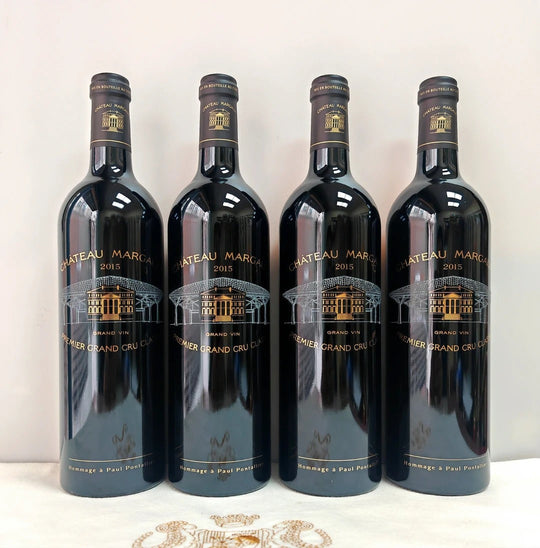
| Margaux 2015 | Source label: core secondary-market collectible | ~ HK$ 44,100 (6 bottles per case) | Source label: anniversary edition with collector interest |
| Margaux 2019 (3L) | HDH auction (double magnum) | About HK$29,827 (one 3L bottle) | Source note: hammer price more than twice the estimate |
| Margaux 1989 | Hong Kong secondary market | About HK$2,262 (one 75cl bottle) | Source note: strong Asian on-premise demand |
| Pavillon Rouge 2022 | London-market trade | About HK$8,820 (6-bottle case) | Source note: expected critic scores supported demand |
Note: the source converts at US$1 ≈ HK$7.8 and £1 ≈ HK$9.8 and names Wine-Searcher and HDH Auctions. It gives no observation or sale date per row, so each reference must be checked against the correct format and buyer's premium.
5. Source US and Asian Market Claims: Hong Kong's Trading-Hub Role
The source says regional demand changes helped lift Bordeaux First Growth pricing in early 2026. No common index or attribution method is supplied, so the statement is treated as market commentary.
- US Market: The Source's Data-Led Return Thesis The source says US investors returned to Bordeaux as tariff concerns eased and became more disciplined in using historical and secondary-market data. It reports that US search interest in First Growths such as Château Lafite Rothschild and Château Mouton Rothschild rose by 50% to 100%, and it calls Bordeaux a core wealth-management allocation. No search platform, query set, period or allocation data are identified, so the figures and portfolio conclusion remain unverified source claims.
- Asian Market: Hong Kong as a Fine-Wine Trading and Collection-Review Hub The source says Hong Kong strengthened its fine-wine trading role and that demand for well-documented, well-stored Bordeaux rose after Lunar New Year. It also says Mainland Chinese wine imports recorded their first increase in early 2026 after ten years of decline. No customs series or comparison period is cited here, so the import and liquidity conclusions require verification.
6. Questions for a 2026 Fine-Wine Collection Review
In a market where quality, authenticity and defensible pricing matter, the source offers three themes for collectors. They are reframed here as review questions rather than investment instructions:
- Review lower-priced vintages on their evidence: The source calls Bordeaux 2021 overlooked, at a market bottom, defensive and capable of rebounding. Those are forecasts; a current price series and the collector's objectives are needed before any decision.
- Review mature holdings when current bids justify it: The source identifies 1989, 2000 and 2005 Bordeaux as mature vintages in a drinking and demand window and predicts scarcity premiums as inventory is consumed. Maturity can support interest, but neither peak demand nor a large premium should be assumed without like-for-like transactions.
- Document storage and provenance: Buyers may give greater weight to bottle condition, bonded-storage records and professional-cellar documentation. Good records reduce uncertainty but cannot establish a premium by themselves.
Request a review from Dibao Wine for a bottle-specific assessment
The source describes the 2026 fine-wine market as a gradual recovery and calls First Growths such as Latour 2016 and Margaux ‘liquid gold’. The corrected record shows Latour 2016 was released on 17 March 2025, and neither historic status nor collector demand establishes dependable wealth preservation or growth.
Want to understand how your bottles compare with dated market references? Prepare the vintage, format, fill, label, capsule, packaging, storage and provenance details for a transparent collection review.
Dibao Wine can compare Bordeaux First Growths, leading Burgundy and rare spirits with available Liv-ex and other market references plus bottle evidence, providing a bottle-specific, non-binding cash indication. The scope, evidence, price basis and handover terms should be explained clearly; the source's price-superlative, live-data and outcome wording is not treated as a commitment.
Château Latour internal link extension
- Further reading from the 2026 Latour and Margaux market guide: three Château Latour bottles change hands after a health-led collection decision —additional context on Latour vintages, bottle condition and market demand.
- Château Latour comparison from the 2026 market guide: a bottle-evidence and secondary-market review in Wan Chai —a practical look at bottle-specific differences in the Latour secondary market.
- Same-region reference from the 2026 market guide: reading a Latour label through vintage, score and bottle evidence —a cross-reference for assessing Bordeaux collections.
- Valuation supplement to the 2026 market guide: 2000 Mouton and La Tâche in a Millennium collection transfer —Adds a completed-transfer example to the article's market discussion.
Send label, vintage, volume, capsule and fill-level photos. Di Bao Wine will review the visible condition and current demand.