California Cult Wines Beyond Screaming Eagle: A 2026 Source Comparison
The source describes a gradual fine-wine recovery in 2026 after a 2023-2024 correction. It places Screaming Eagle at the top with a 12-bottle case ...

In This Article
The source describes a gradual fine-wine recovery in 2026 after a 2023-2024 price correction. It says Screaming Eagle remained at the top of the California cult-wine market, while collectors were also considering Screaming Eagle alternatives. Its headline reference is about a 12-bottle case at HKD 197,640(approximately £19,764), but no retrievable transaction set or exact valuation date is supplied. Scarcity and allocation do not establish that another wine will offer better liquidity or stable appreciation.
Dibao Wine's source narrative links a global rate-cut cycle with renewed capital flows into tangible assets. That macro claim is unverified here. In Napa Valley, the article considers producers other than Screaming Eagle and their source-provided California wine resale references with attention to recognition, production and market claims. Every figure remains dated context rather than a current quote or investment recommendation.
1. Opus One: the source's liquidity benchmark
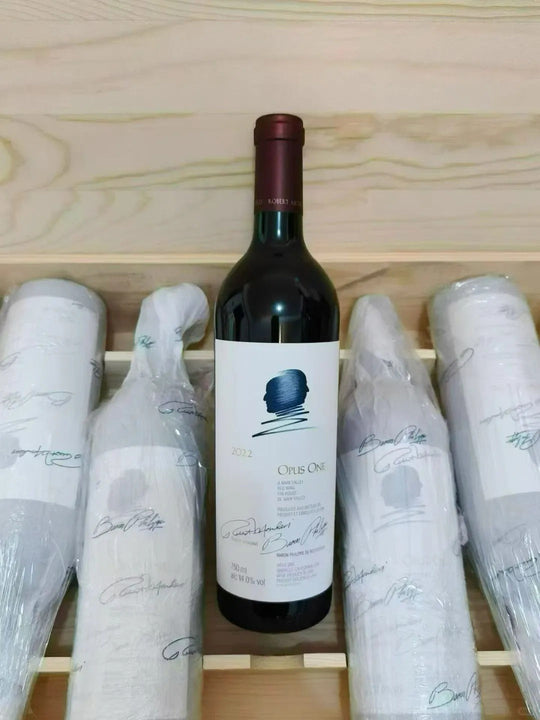
The source contrasts the extreme scarcity of Screaming Eagle with the wider market presence of Opus One. It identifies Château Mouton Rothschild—the Bordeaux estate also named Mouton Rothschild—and Napa pioneer Robert Mondavi as the partners in a Bordeaux-Napa project.
1. Why does the source call Opus One easier to resell?
The source attributes the claimed Opus One value resilience to quality control, optical sorting and custom-yeast practices, and says these reduce vintage variation. It also claims that 2016 led a rebound from late 2025 into early 2026. No technical comparison or transaction series is supplied, so consistency and rebound remain source assertions.

2. Source references for selected Opus One vintages in Hong Kong
The source converts its 2026 market references at 1 USD ≈ 7.8 HKD. No precise valuation date or underlying dataset is provided.
| Vintage | Source rating (JS/WA) | Source Hong Kong retail range (per bottle) | Source collection-review range | Source liquidity label |
|---|---|---|---|---|
| 2013 | 100 points | HKD 3,400 - 3,800 | HKD 2,600 - 3,000 | Source label: very high; perfect-score premium claimed |
| 2016 | 99 points | HKD 3,200 - 3,600 | HKD 2,500 - 2,900 | Source label: very high; rebound indicator claimed |
| 2018 | 99 points | HKD 3,000 - 3,400 | HKD 2,300 - 2,700 | Source label: high; widely traded |
| 2021 | Newly released | HKD 3,100 - 3,500 | HKD 2,400 - 2,800 | Source label: immediate liquidity / launch interest claimed |
2. Harlan Estate: a Napa estate compared with Bordeaux First Growths
The source says Harlan Estate ranked second behind Screaming Eagle in a 2025 Liv-ex California value ranking and notes that some commentators call it a 'Napa First Growth'. No classification table or source link is supplied, so the rank and liquidity implications require verification.
- Source market note: the source gives Harlan Estate's 2025 average at about a 12-bottle case of HKD 113,030(approximately £11,303), with a stated per-bottle value of HKD 9,419. These are source figures, not offers.
-
Source resale view: the source says Harlan's production is lower than Opus One's and calls 2015, 2016 and 2018 peak resale vintages. It supplies no production comparison or dated demand series, so neither timing nor liquidity is assured.

3. Dominus Estate: Bordeaux-Napa context
The source links Dominus Estate to Christian Moueix and Pétrus and describes international demand and stable pricing in 2026. Its wording that he was a former Pétrus winemaker is not independently established here, and no price-volatility series is supplied.
- Source style and investment label: the source compares Dominus with Bordeaux's Right Bank, emphasising terroir and ageing potential, and claims stable business-entertaining demand in Asia and Hong Kong. These are source descriptions rather than demand evidence.
-
Source spread claim: the source says Dominus has a narrower bid-ask spread than faster-rising cult wines, but provides no dated quotations. A smaller spread must not be assumed for an individual bottle.

4. Source watchlist: Scarecrow and Promontory
The source says these estates performed strongly in its 2025-2026 wine resale-price ranking and places them among its five leading California investment brands. No ranking dataset is supplied, so that label is not independently confirmed.
-
Scarecrow: the source links old-vine Cabernet Sauvignon and high critical ratings with a per-bottle average above HKD 6,830 (£683). It calls 2016 and 2018 particularly sought after, but provides no transaction sample; neither value nor liquidity is assured.

-
Promontory: the source describes it as a Harlan family project with a per-bottle average of about HKD 6,648 (£665) and highlights its canyon site. Calling it a 2026 market newcomer is a source characterisation, not a price forecast.

5. Source 2026 comparison of selected California wines
The source says the table combines production scale and secondary-market turnover to provide fine-wine collection-review context. It provides no methodology or turnover data, so the scores and labels are preserved only as source opinions.
| Source comparison factor | Harlan Estate | Opus One | Dominus Estate | Scarecrow |
|---|---|---|---|---|
| Source scarcity weight | Very high (9/10) | Medium (6/10) | Upper-medium (7/10) | High (8/10) |
| Source secondary-market turnover label | Medium; experienced collectors | Very high; frequent trading claimed | High; stable trading claimed | Medium; owners described as reluctant to sell |
| Source resale spread | About 15%-25% | Source minimum: 10%-15% | Source lower range: 12%-18% | Source medium range: 15%-20% |
| Source 2026 appreciation label | Steady growth claimed | Structural recovery claimed | Drinking-window demand claimed | Scarcity-led growth claimed |
6. Practical bottle checks before a sale
For a fine-wine resale review, visible condition and provenance can materially affect the relevance of a comparison.
- Check the fill level (ullage): for California wines made after 2010, the source expects into-neck fill and says a low level may indicate heat exposure or seal problems, with a reduction above 20%. Age, bottle format and other evidence matter, so 20% is not an automatic formula.
- Keep the original wooden case (OWC): the source says an original case for producers such as Opus One or Harlan may add HKD 150 - 300 as the source's stated premium; no automatic adjustment should be assumed.
- Provenance: temperature-controlled cellar records or import documents may support provenance, but do not prove authenticity or a particular price.
- Avoid preventable damage: mould, insect damage or a deformed capsule can reduce presentation value and should be shown honestly in photographs.
Conclusion: use bottle-specific evidence
The source calls 2026 a golden turning point for California fine wine and says capital is returning to globally recognised producers. It provides no evidence that this is the best time to sell Opus One, Harlan or Dominus; owners should use dated evidence and their own objectives.
Dibao Wine — California fine-wine collection reviews Dibao Wine says it has years of experience and follows Liv-ex references for mature-wine collection reviews. The source says it follows Liv-ex and offers what it calls the most accurate and competitive wine resale prices as well as cash or FPS settlement on the day of review and absolute privacy. This article does not adopt those assurances. The source prints the numeral 15 beside its response target; timing, privacy, price and payment terms remain case-specific.
Related California wine reading
- Related case from this California comparison: Screaming Eagle vintage, condition and handover context. Adds vintage, bottle-condition and demand context.
- Screaming Eagle comparison from this guide: the 1992, 1997 and 2012 vintages in source market context. Use it to compare vintages rather than Screaming Eagle with itself.
- Same-producer reading from this guide: Screaming Eagle 1992 scarcity and source price context. Provides a California cross-reference for a bottle-specific review.
- Market-context supplement to this guide: Screaming Eagle estate and collection context. Adds background; it is not a valuation of the reader's bottle.
Send label, vintage, volume, capsule and fill-level photos. Di Bao Wine will review the visible condition and current demand.