Bordeaux Right Bank Market Guide: Angélus, Ausone and Pavie
The source reviews the 2022 Saint-Émilion classification changes involving Château Ausone, Château Angélus and Château Pavie. It frames them as thr...

In This Article
Saint-Émilion on Bordeaux's Right Bank combines a formal classification with estate reputations built over time. For the 2022 classification, Château Ausone and Château Cheval Blanc withdrew from the process, and Château Angélus later withdrew its application. This source groups Ausone, Angélus and Château Pavie for a comparison of their current market context.
For collectors, the source argues that the three estates'secondary-market value depends not only on classification, but also on scarcity, brand recognition, drinking context and bottle-specific evidence. Dibao Wine presents this source-based guide to the three estates. All price references below require a current check for vintage, format, condition and provenance.
1. Saint-Émilion's 2022 Classification Changes
Saint-Émilion is reclassified approximately every ten years. In the 2022 cycle, Château Ausone and Château Cheval Blanc withdrew from the process, criticising the weight assigned to tourism, social media and other promotional criteria. Château Angélus later withdrew its application. These decisions prompted debate about how formal rank relates to terroir, ageing quality and market reputation.
The 2022 classification placed Château Pavie and Château-Figeac in Premier Grand Cru Classé A. Ausone and Angélus remain outside that classification and are assessed by buyers on their own records and bottle-specific evidence.
2. Château Ausone: Scarcity and Terroir
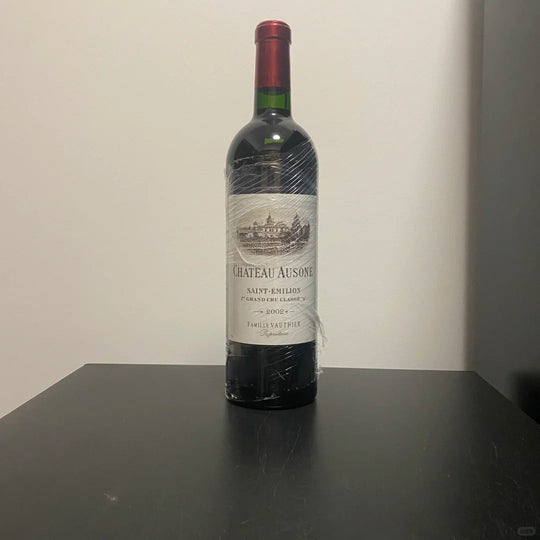
The source describes Château Ausone as exceptionally scarce among leading Bordeaux estates, with about 7 hectares of vines and annual production of approximately 1,600 to 2,000 cases. These figures are estate-level context, not a valuation of a particular bottle.
1. Why Production Scale Matters
Compared with Left Bank First Growths that may produce around 20,000 cases, Ausone's lower output can support scarcity. The source characterises its pricing as relatively stable with stronger demand for bottles in excellent condition, but provides no dated series for that claim.

2. Source-Period References for Selected Vintages
The source table converts prices at US$1 ≈ HK$7.8. It does not provide row-level dates or transaction citations, so the figures are historical references rather than current offers.
| Vintage | Robert Parker (RP) Rating | Secondary Market Retail Estimate (12 bottles per case) | Source's Expected Buyback Range per Bottle (HKD) | Source Commentary |
|---|---|---|---|---|
| 2000 | 98-100 | HK$ 81,042 | HK$ 6,000 - 6,800 | Millennium vintage; source describes it as very scarce |
| 2005 | 100 | HK$ 98,982 | HK$ 7,500 - 8,500 | Perfect-score vintage; source reports strong demand |
| 2009 | 100 | HK$ 72,462 | HK$ 5,300 - 6,000 | Mature profile; source reports steady demand |
| 2010 | 98 | HK$ 71,994 | HK$ 5,500 - 6,200 | Firm structure; source reports a 2025 rebound |
| 2015 | 100 | HK$ 52,260 | HK$ 3,800 - 4,400 | Perfect-score vintage; appreciation is not assured |

3. Château Angélus: Cultural Recognition and Brand Strength
The source highlights Château Angélus's bell emblem and appearances in James Bond films as contributors to its international recognition. Brand visibility may affect demand, but it does not determine a bottle's value.

1. The Bell Motif in Asian Markets
The source reports strong interest in Château Angélus in China and Hong Kong, where its bell motif can carry cultural appeal. It also highlights the black-and-gold embossed 2012 bottle commemorating the estate's promotion to Class A; any premium remains bottle- and market-specific.
2. Source-Period References for Selected Vintages
The source table converts prices at £1 ≈ HK$10. It does not provide row-level dates or transaction citations, so the figures are not current bids.
| Vintage | Rating Indicators | Average Transaction Reference (per case of 12 bottles) | Source Popularity Rating | Source Commentary |
|---|---|---|---|---|
| 2000 | 99 | HK$ 52,000 | ★★★★★ | Millennium vintage; prominent in the source |
| 2005 | 100 | HK$ 48,300 | ★★★★★ | Perfect-score vintage; source reports strong liquidity |
| 2010 | 99 | HK$ 33,100 | ★★★★☆ | Structured wine with ageing potential |
| 2012 | 95 | HK$ 45,700 | ★★★★★ | 21.7-carat gold-embossed commemorative bottle highlighted by the source for collectors |
| 2016 | 100 | HK$ 31,500 | ★★★★☆ | Modern style; source reports active secondary-market interest |
4. Château Pavie: A Modern-Style Class A Estate
Under Gérard Perse, Château Pavie became associated with a ripe, concentrated style. Pavie remains one of the two current Premier Grand Cru Classé A estates, alongside Château-Figeac.

1. Market Liquidity Context
The source gives Château Pavie's vineyard area as approximately 37 hectares and annual production as about 6,500-8,000 cases. It argues that this scale supports secondary-market activity. For a wine buyback review, however, turnover and bid-offer spreads depend on the vintage, format, condition, provenance and current buyer demand.
2. Château Pavie Source-Period Price References
The source table converts prices at £1 ≈ HK$10. It does not provide row-level dates or transaction citations, so the figures are not current offers.
| Vintage | RP/WA Rating | Market Reference Price (per case of 12 bottles) | Source's Expected Buyback Price per Bottle (HKD) | Source Tasting and Market Notes |
|---|---|---|---|---|
| 2000 | 100 | HK$ 37,100 | HK$ 2,800 - 3,200 | Black-fruit and truffle profile; source reports steady demand |
| 2005 | 100 | HK$ 30,400 | HK$ 2,300 - 2,600 | Large structure; source notes institutional interest |
| 2009 | 100 | HK$ 2,950 (3 bottles) | HK$ 2,200 - 2,500 | Full-bodied profile; source places it in a drinking window |
| 2010 | 100 | HK$ 32,550 | HK$ 2,500 - 2,800 | Balanced vintage; source reports secondary-market activity |
| 2016 | 100 | HK$ 24,900 | HK$ 1,900 - 2,200 | Source presents relative value and liquidity |

5. Source's 2025-2026 Secondary-Market Outlook
The source describes signs of stabilisation after the 2023-2024 correction and says buyer activity reached 38% by late 2025, the highest level since the correction. It does not supply the underlying Liv-ex series, so the figure should be treated as source-period context.
1. The Source's 2026 Sale-Review Thesis
- Interest-rate context: The source expected lower U.S. interest rates to support demand for tangible assets. This is a macroeconomic thesis, not a bottle-specific forecast.
- Reported market recovery: The source says Château Ausone 2010 rose by more than 20% in 2025. No transaction series is supplied, so the figure requires verification before use.
- Asian-buyer activity: The source characterises Hong Kong auctions, including Acker and Sotheby's, as active with stable sell-through. Current auction data should be checked separately.
2. Key factors affecting resale prices
- Provenance: An original wooden case and documented storage history can support provenance, but neither alone proves authenticity, condition or value.
- Condition: The source cites a possible 10%-30% price effect from label damage, capsule condition and fill level. The range is not automatic and needs bottle-specific evidence.
- Vintage rarity: The source describes perfect-score vintages and special bottles such as Château Angélus 2012 as comparatively resilient. No price protection is assured.
6. Requesting a Bottle-Specific Review
Dibao Wine offers a review that may include:
- Initial valuation: Dated Liv-ex and Wine-Searcher references may inform a review after the exact wine, format, condition and provenance are matched; they do not ensure a price.
- Professional appraisal: Bottle photographs and available records can support an initial authenticity and storage-condition review; scope and fees, if any, must be confirmed.
- Rapid settlement: Payment method, timing and privacy arrangements are agreed only after the wine and terms have been verified.
- Door-to-door service: Collection availability and logistics depend on the confirmed Hong Kong location and the individual lot.
For a cellar reorganisation or possible sale, Dibao Wine can provide a bottle-specific review; the review does not constitute an offer or completed transaction.
Request an Initial Review
Responsible-drinking notice: alcohol can harm health and must not be consumed by minors. Market references fluctuate; any offer is subject to physical inspection and agreed terms.
To apply this Château Ausone discussion to a collection, prepare the vintage, bottle count, fill level and clear label photographs, then contact WhatsApp 96737259 for an initial, non-binding review.
Cross-References for the Bordeaux Market
- Related market analysis: Angélus, Ausone and Pavie in recent secondary-market context —Adds selected-vintage, condition and liquidity context for Château Ausone.
- Related comparison: Château Ausone and Château Pavie in the 2026 secondary market —Compares Château Ausone and Château Pavie through their different secondary-market positions.
- Related Right Bank case: 2005 Château Pavie and Château Angélus change hands —Adds a practical Bordeaux collection example.
- Related case: a transfer of leading Bordeaux wines from a business-entertaining collection —Adds a practical transaction narrative to the market discussion.
Send label, vintage, volume, capsule and fill-level photos. Di Bao Wine will review the visible condition and current demand.