Screaming Eagle: The Cult-Wine King Worth a 10-Year Wait
Opus One was already treated as an American wine icon when another “king of cult wines” emerged. The two did not become rivals; this story focuses ...

In This Article
As the saying goes, “Two tigers cannot share one mountain.” The American wine world already had Opus One as one king, yet another “king of cult wines” emerged. Rather than becoming rivals, the two “kings” are on friendly terms. This weekend's story is about the other king—Screaming Eagle Winery.

Does the name Screaming Eagle bring to mind an eagle soaring across the sky? In the United States, the name has another meaning. “Screaming Eagles” is the nickname of the US Army's 101st Airborne Division, whose shoulder patch bears a screaming eagle. The division played an important role in the Normandy landings and is one of the most celebrated units in US military history.

After completing her first independent vintage, proprietor Jean Phillips took the wine to Robert Mondavi Winery for a tasting. The response was: “This wine may be an eagle—or it may be nothing.” Phillips decided to name the estate Screaming Eagle because she wanted it to be that eagle.

Jean Phillips was originally a real-estate agent. Perhaps guided by a keen professional instinct, she joined the vineyard-buying trend and purchased a total of 57 acres in Oakville in 1986. At the time, only 1 acre was planted with about 80 Cabernet Sauvignon vines, alongside several white-grape varieties.
At first, Phillips sold all the grapes to nearby wineries. After 3 years, however, she decided to try making wine herself. Because she had personally cared for the vineyard throughout, the Cabernet Sauvignon fruit was fresh and healthy. The Screaming Eagle legend began in a modest stone building.
With only basic winemaking facilities, Phillips relied on traditional, labour-intensive methods. Grapes were pressed by hand, the juice was held in plastic containers and the wine was then aged in new oak barrels. Despite the uncertainty surrounding this improvised process, the first tasting won praise from her friend Robert Mondavi and strengthened her resolve to continue making wine.

The King of Cult Wine: Less Is More
Bordeaux has garage wines; the United States has cult wines. From the 1980s onward, a group of small California estates emerged with the goal of producing elite wines. Their wines received strong reviews but were made in extremely small quantities—usually only a few hundred cases a year—making them exceptionally expensive. These became known as cult wines.
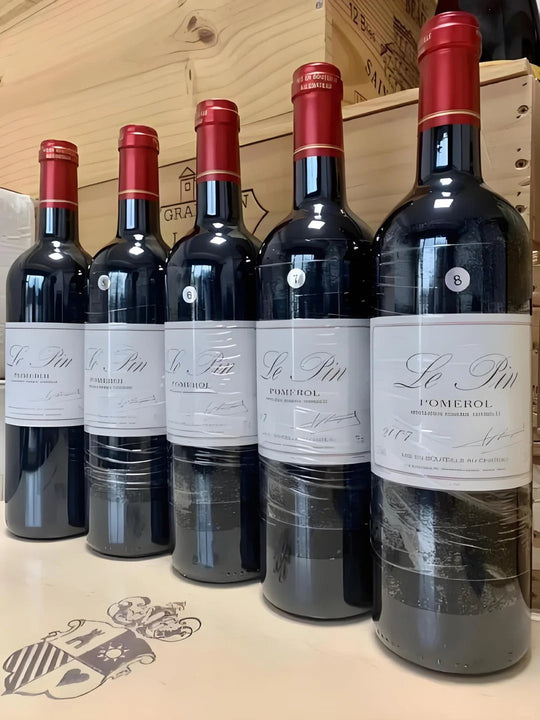
Screaming Eagle is widely regarded as the king of cult wines. Le Pin, the pioneer of garage wine, produces about 6000 bottles a year, while Screaming Eagle makes fewer than 500 cases. This scarcity reflects Phillips's “Less is more” philosophy.
After the successful tasting, Robert Mondavi introduced Phillips to Heidi Barrett, the renowned winemaker praised by Robert Parker as the “First Lady of Wine.” The two ambitious women became well-matched partners and brought their shared perfectionism to the winemaking process.

Following the approach of French garage wines, the team selected only the ripest, flawless grapes for its top wine. In an imperfect growing year such as 2000, it abandoned production altogether.
In 1995, Robert Parker awarded the 1992 Screaming Eagle Cabernet Sauvignon—the estate's inaugural vintage—an almost perfect 99 points, bringing the winery instant attention. Only 225 cases were reportedly produced in 1992, turning the wine into a treasure sought by collectors.
Parker later awarded perfect scores to the 1997, 2007, 2010 and 2012 vintages, praise that even leading Bordeaux estates rarely matched. In 2000, a 6-litre bottle of 1992 Screaming Eagle sold for US$500,000, breaking the wine-auction record at the time and taking the estate's reputation to a new level.
Further Reading on California Collectibles
- Further reading from “Screaming Eagle: The Cult-Wine King Worth a 10-Year Wait”: [Dibao Wine Purchase Case] Opus One 2021 in Original Wooden Cases: A Change in Taste Finds a New Home for a California Icon – Adds context on Opus One vintages, bottle condition and secondary-market demand.
- An Opus One comparison for “Screaming Eagle: The Cult-Wine King Worth a 10-Year Wait”: Hong Kong Fine-Wine Purchase Case: When a Napa Valley Icon Meets the Right Collector—Opus One 2016 and 2018 – Helps compare Opus One collections across vintages and secondary-market contexts.
- A regional reference for “Screaming Eagle: The Cult-Wine King Worth a 10-Year Wait”: Opus One Resale-Market Trends: Liquidity for a Franco-American Icon in Hong Kong – A useful cross-reference when assessing a California fine-wine collection.
- Additional valuation context for “Screaming Eagle: The Cult-Wine King Worth a 10-Year Wait”: Premium Opus One Purchases in Sham Shui Po: Understanding the American Icon's Market Potential – Uses market analysis to clarify the pricing logic behind the article.
Further Observations on Screaming Eagle
The article can be extended in two directions: Screaming Eagle's recognition in the California and high-end wine markets, and whether the actual bottle condition supports the collection or transfer value discussed.
For collectors reading “Screaming Eagle: The Cult-Wine King Worth a 10-Year Wait,” the most useful approach is to compare recent transactions, ratings and storage condition for the same vintage before deciding whether to sell. For individual loose bottles, complete photographs and provenance are more persuasive than simply describing them as fine wine.
Before Handover: For a Screaming Eagle collection, first confirm the vintages, storage location and whether original cases are present. These details directly affect the market assessment discussed in “Screaming Eagle: The Cult-Wine King Worth a 10-Year Wait.”
Send label, vintage, volume, capsule and fill-level photos. Di Bao Wine will review the visible condition and current demand.