The Lafite Myth: Did 1982 Really Rule the Century?
Dibao Wine examines the cultural mythology of “1982 Lafite” and asks why its market premium has exceeded that of some higher-scoring vintages. The ...

In This Article
Dispelling the Myth—Why Did 1982 Château Lafite Rothschild Become an Enduring Cultural Icon?
Propelled by references in Hong Kong cinema, “1982 Lafite” long ago became more than the name of a bottle. It came to represent status, wealth and taste. For Lafite and Bordeaux as a whole, 1982 was an exceptional vintage, associated with the region's revival and often described as one of the most important years in its history.
Yet one question persists among wine lovers: was 1982 truly Lafite's unrivalled vintage of the century?

The price-rating paradox: reason versus emotion
The source presents 1982 Lafite as commanding the strongest market premium, far above some other celebrated vintages awarded perfect critic scores. It notes that 1982 and the Parker-rated 2003, for example, have traded at prices several times apart. This is historical market context, not a current quotation.
Scores alone tell a different story:
- Average critic score: For 1982 Lafite, the source cites an average from Tastingbook.com contributors, including several Masters of Wine, of 94.5 points for 1982 Lafite, below leading vintages such as 1959 at 98.2, 2016 at 98.1 and 2017 at 97.7.
- Robert Parker's endorsement: The source itself gives two Robert Parker scores for 1982—98 in one table and 100 in a cited review. It also lists 1870, 1953, 1986, 1996 and 2003 among Lafite vintages awarded 100 points.
Dibao Wine's perspective: The value of 1982 Lafite does not rest on a score alone. The source attributes its standing to the combined effect of an exceptional vintage, critical recognition and a cultural phenomenon. It may not lead every critic ranking, but it remains one of Lafite's most culturally prominent collector vintages while investment outcomes remain uncertain.
The three forces behind the legend: weather, endorsement and culture
Why did this bottle come to transcend the wine itself and attract such intense auction interest? The source gives three reasons:
1. Weather: an exceptional vintage (The Perfect Vintage)
1982 is regarded as an outstanding Bordeaux vintage. Abundant sun and warm but not excessive heat, followed by dry conditions during the key ripening period, helped grapes reach full maturity. The resulting wines are associated with ripe fruit, smooth tannins, balanced sugar and acidity, and substantial ageing potential.
2. Endorsement: Parker's influential call
In 1982, while many traditional European critics remained cautious about the new Bordeaux vintage, the then-emerging American critic Robert Parker put his reputation on the line and called 1982 one of the twentieth century's finest vintages.
As Parker became one of the world's most influential wine critics, his strong endorsement helped 1982 Lafite—and 1982 Bordeaux more broadly—become regarded as a twentieth-century classic.

- The source paraphrases Parker's praise for 1982 Lafite as exceptionally rich, pure, symmetrical, deep and persistent, with a finish lasting almost a minute, and as a modern counterpart to the immortal 1959. It records a score of 100 points for that review.
3. Culture: demand from Asian buyers (The Asian Phenomenon)
During the economic expansion of the 1980s in Japan, Hong Kong and elsewhere in Asia, newly wealthy buyers helped drive demand for 1982 Lafite. Later, Hong Kong films such as God of Gamblers repeatedly referenced “'82 Lafite”—that is, 1982 Lafite—intensifying demand among mainland Chinese buyers. This cultural effect added prestige and perceived scarcity to an already finite old vintage.
Resale context: Dibao Wine's valuation approach
Dibao Wine treats 1982 Lafite as a significant fine-wine collectible whose resale context reflects global recognition of its rarity and history. An actual offer still depends on current evidence and bottle condition.
Market references for 1982 Lafite in the source
Prices can vary substantially, so historical auction records and dated current offers must be kept separate.
-
Single-bottle range, 750 ml:
- The source provides an indicative resale range for 1982 Château Lafite Rothschild HK$40,000-60,000 subject to condition.
-
12-bottle case estimate:
- At a 2018 Hong Kong auction, the source records an estimate for a 12-bottle case of 1982 Château Lafite Rothschild of US$30,000-40,000 and, using the source's approximate 1:8 exchange rate, HK$240,000-320,000.
Note: The source says a standard 750 ml bottle of '82 Lafite with clear provenance and excellent condition may fall anywhere from tens of thousands to more than HK$100,000. This broad, undated statement is not a current offer.
Factors that materially affect an offer
In a review of 1982 Lafite, Dibao Wine considers the following factors because each can materially change the value supported by the evidence:
-
Condition: This is a central part of assessing mature wine.
- Fill level or ullage: A higher fill, nearer the cork, generally indicates less evaporation and may support buyer confidence, although it cannot prove storage history on its own.
- Label and capsule: An intact label and capsule generally improve presentation and marketability.
- Storage environment: Evidence of stable temperature, humidity and protection from light is important, because poor storage can damage wine and reduce its value.
-
Provenance and authenticity:
- Authenticity review: 1982 Lafite has been frequently counterfeited, so a careful physical and documentary review is essential; no single feature establishes authenticity.
- Anti-counterfeit features: The 1982 bottle predates Lafite's later bubble-code label, which the source says was adopted from the 2009 vintage. Reviewers can still examine the cork, expected to carry the vintage and château motif, and period bottle details. The source notes that pre-1996 Lafite bottles generally lack a design below the neck, except for a Halley's Comet engraving on 1985 bottles.
- Chain of ownership: Clear, reliable provenance—such as an original receipt or records from a recognised cellar or auction house—is important. Re-corking outside the château can substantially reduce confidence unless there is reliable documentation from the estate itself. The source states that Lafite discontinued this service to protect authenticity.
Other highly rated Lafite vintages behind the legend
Although the source says 1982 has often commanded the largest premium, collectors may also consider Lafite's other top-rated vintages:

| Vintage | Critic or institution cited | Score | Source note and resale context | Source entry |
|---|---|---|---|---|
| 1959 | Robert Parker | 99 points | Described as remarkably long-lived, entering a drinking phase only after about 40 years and regarded as one of Lafite's vintages of the century. | |
| 1986 | Robert Parker | 100 points | Described as exceptionally concentrated and deep, with cedar, chestnut, mineral and rich fruit character and very long ageing potential. | |
| 1996 | Robert Parker | 100 points | Only 38% of the crop reportedly entered the grand vin, with Cabernet Sauvignon at 83%; the source describes a powerful Lafite capable of ageing for four or five decades. | |
| 2000 | Wine Spectator | 100 points | Presented as a milestone of the 21st century, with blackcurrant liqueur, white flowers, liquorice and toasted-oak aromas. | |
| 2003 | Robert Parker | 100 points | Described as combining classic graphite, liquorice, blackcurrant liqueur, smoke and floral notes with concentration, purity and density. | |
| 2009 | RP/JK | 99+ points | Described as classically elegant, pure and distinctive, with potential to become a magnificent wine. | |
| 2010 | Robert Parker | 98 points | Described as rich, full-bodied and built to age for half a century or longer. |
Conclusion: The legendary standing of 1982 Lafite is a distinctive phenomenon in wine collecting and market history. It rests not only on quality scores but also on timing, Asian demand and Robert Parker's high-stakes call. The Dibao Wine approach uses a transparent review of a 1982 bottle so that any resale discussion reflects its current, supportable value in the market.
Dibao Wine—Private Reviews for Leading Fine Wines
Do you hold a bottle of 1982 Lafite whose history extends beyond its critic score?
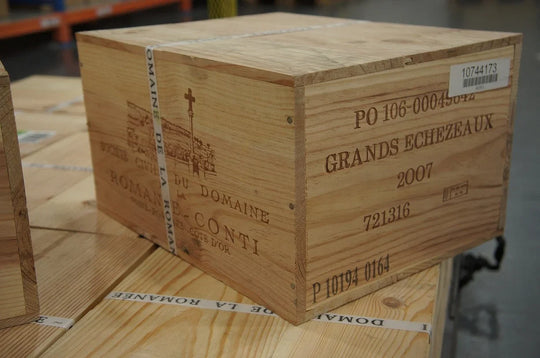
Dibao Wine recognises that every bottle from a legendary Lafite vintage, Pétrus or Domaine de la Romanée-Conti—the estate commonly abbreviated DRC—requires bottle-specific evidence. Investment outcomes remain uncertain; the assessment is based on identity, provenance, condition and market demand.
Whether you are freeing storage space, reallocating a collection or simply seeking to understand a bottle, Dibao Wine can review the available evidence and explain the valuation basis.
Contact Dibao Wine to discuss a well-documented route for your fine wine.
To apply this 1982 Lafite framework to an actual collection, prepare the vintages, bottle count, fill levels and label photographs, then use WhatsApp 96737259 to request an initial review.
Cross-References for the Bordeaux Market
- Continue from “The Lafite Myth: Did 1982 Really Rule the Century?” with: Is Your Lafite Still Valuable? The Quiet Contest over “Perfect Condition” —additional context on Lafite vintages, bottle condition and market demand.
- Compare this 1982 Lafite guide with: Saint-Émilion's Modern King: Château Pavie's Century of Controversy and Perfect Scores —a comparison of different Bordeaux collector narratives on the secondary market.
- A related 1982 Lafite reference: Essential Wine-Resale Reading: What Is Ullage and How Does It Affect a Lafite Offer? —a cross-reference for assessing Bordeaux collections.
- For additional 1982 Lafite context: How to Assess Whether Lafite Is Genuine: Label, Bottle and Resale-Review Checks —practical authentication context to complement market discussion.
Send label, vintage, volume, capsule and fill-level photos. Di Bao Wine will review the visible condition and current demand.