DRC Échezeaux and Grands Échezeaux: Collection and Buyback Guide
Domaine de la Romanée-Conti (DRC) sits at the summit of Burgundy collecting. At Dibao Wine, assessments distinguish DRC flagships Romanée-Conti and...

In This Article
In the global fine-wine market, the estate known in full as Domaine de la Romanée-Conti (abbreviated DRC) sits at the summit of Burgundy collecting. DRC wines combine rarity, long ageing potential and broad recognition, but they remain subject to changes in price and liquidity like other secondary-market assets.
As a specialist wine buyer, Dibao Wine has observed that Romanée-Conti and La Tâche are extremely scarce and expensive, while DRC Échezeaux and Grands Échezeaux can provide a different entry point to the domaine. The two Grand Crus differ in terroir, output, style and secondary-market behaviour. This guide compares those differences and explains what a professional top-Burgundy valuation requires.
History, Terroir and Market Positioning
The DRC domaine's history reaches back to vineyards held by the Abbey of Saint Vivant in the 13th century. In 1760, the Prince of Conti prevailed over Madame de Pompadour in the contest to acquire Romanée-Conti. When Duvault-Blochet acquired Romanée-Conti in 1869, he already owned holdings in Échezeaux and Grands Échezeaux; together these parcels helped form the modern domaine.

- Grands Échezeaux: Scarcity and a More Structured Profile Grands Échezeaux lies southwest of Clos de Vougeot. The appellation covers about 9.14 hectares, of which DRC owns 3.53 hectares, its largest single holding. The source describes this roughly 250-metre site as comparatively even in limestone and clay. Its wines are often more structured, with dark fruit, forest-floor, game and toasted-almond notes and substantial ageing capacity. Limited output can support scarcity, but it does not create an automatic price floor for high-value wine buyback transactions.
-
Échezeaux: Diversity and Wider Market Circulation Échezeaux covers about 36.26-37.7 hectares, and DRC owns 4.67 hectares, principally in Les Poulaillères. The source characterises it as more perfumed and supple, with rose, violet and fresh-cherry notes. The larger, more varied appellation also creates more market supply than Grands Échezeaux, which can make the wine easier to encounter in auctions and Hong Kong secondary-wine trading. Actual liquidity still depends on the vintage, price, format, provenance and condition.
 Output and Scarcity
Strict output is central to DRC's position in the wine investment market. The domaine farms biodynamically, and the source gives an average yield near 2500 litres per hectare, or 25 hl/ha, below the legal Grand Cru ceiling. Actual yields vary substantially by vineyard and vintage.
| Wine | DRC vineyard area (hectares) | Average annual output (12-bottle cases) | Average yield (hl/ha) | Average vine age |
|---|---|---|---|---|
| Romanée-Conti | 1.81 | 450 | 25 | 53 |
| La Tâche | 6.06 | 1,870 | 25 | 47 |
| Richebourg | 3.51 | 1,000 | 25 | 42 |
| Romanée-St-Vivant | 5.29 | 1,500 | 25 | 34 |
| Grands Échezeaux | 3.53 | 1,150 | 25 | 52 |
| Échezeaux | 4.67 | 1,340 | 25 | 32 |
| Montrachet | 0.68 | 250 | 25 | 62 |
The table places combined annual output near 2500 cases. DRC allocations make single-vintage bottles difficult to obtain at release, but any secondary-market premium must still be established from actual transactions.

Historical Performance and Current Sale Context
The source presents DRC as having outperformed mainstream equities over long periods. It also records a roughly 23% correction in the wider fine-wine market during 2023-2025. The packet does not supply a complete, independently reproducible return series, so the figures below remain source-reported historical context rather than a forecast.
| Asset | 1-year return | 5-year return | 10-year return | Source's market characterisation |
|---|---|---|---|---|
| Échezeaux | 42.60% | 187.30% | 462.61% | Broader circulation and higher sensitivity to a market upswing |
| Grands Échezeaux | 42.43% | 190.98% | 409.31% | Lower output and a more defensive scarcity profile |
| La Tâche | 31.90% | 130.92% | 285.47% | A core monopole with a long record of collector demand |
| Romanée-Conti | 20.54% | 77.75% | 180.14% | A trophy wine sometimes described as a high-end store of value |
| Liv-ex 100 Index | 17.86% | 33.91% | 55.11% | Broad fine-wine market benchmark |
How the Source Interprets the Data
- Upside sensitivity versus defensive scarcity: The source says Échezeaux rose as much as 250% during the 2015-2018 expansion, while Grands Échezeaux held up better during the 2023-2025 correction because its output was about one quarter as large. Without the underlying series, these remain source-reported comparisons rather than assured future behaviour.
- Hong Kong price relationship: The source says Grands Échezeaux often trades at roughly 1.2:1-1.5:1 relative to Échezeaux. It gives an indicative Hong Kong buyback value for a bottle of 2012 DRC Grands Échezeaux of HK$26,350, while stating that a 12-bottle 2011 DRC Assortment containing both wines can be worth as much as HK$628,000. The live value of either lot requires current bids and inspection.

Authentication and Provenance: Managing Counterfeit Risk
For mature-wine valuation and buyback, provenance and authentication can determine whether a bottle is marketable. DRC is a frequent target for counterfeiters, so bottle and label evidence should be assessed together rather than relying on one feature.
- Physical and digital security: The Chinese source says that from 1993 DRC used a distinctive parallel-sided neck, label Microprint and laser-engraved serial numbers, with rare Reserve Personnelle exceptions, and that more recent bottles use a Prooftag Bubble Tag™ system verified by QR Code. Because anti-counterfeit details vary by vintage, an assessor should check the exact bottle against current estate guidance and provenance instead of treating one missing feature as conclusive.
- Condition and presentation: In Dibao Wine's source account, a sealed original wooden case (OWC) may produce a 10%-15% premium, while documented temperature-controlled storage at 13°C and strong ullage may support a valuation 15%-20% above a comparable bottle without the same evidence. These ranges are not automatic and require bottle-by-bottle comparison.
Climate Change and Vintage Style
The source says average growing-season temperatures have risen since the 1980s and harvests have moved earlier. In warm years such as 2019 and 2020, DRC wines may exceed 14% alcohol and show greater density. It also argues that higher, well-drained parcels near 300 metres, such as Échezeaux du Dessus, may retain acidity better in hot years. That is a viticultural interpretation, not a projection of value.

Vintage Selection and Collection Planning
For owners considering DRC buyback or a collection purchase, the source groups vintages as follows:
| Collection profile | Representative vintages | Source strategy | Market characteristic |
|---|---|---|---|
| Classic collection (Legendary) | 2005, 2010, 2015, 2019 | The source calls 2019 a benchmark vintage and says the scarcity of 2005 can support a higher specialist-market premium. | Cited critic scores reach 96+; scores alone do not determine a transaction price. |
| Balanced value | 2014, 2017, 2018 | Lower entry prices and earlier drinking windows can suit owners seeking a broader buyer pool. | An elegant style may support restaurant demand, subject to current price and condition. |
| Thematic demand | 1988, 2000, 2012 | The source notes short-term Lunar New Year or Year of the Dragon interest among some Asian buyers. | Festive gift demand can be temporary and should not be treated as a standing premium. |
| Cool-vintage scarcity (Cool/Scarce) | 2008, 2011, 2021 | The 2021 frost sharply reduced output and produced a more classical, lighter profile, according to the source. | Low supply may support buyer interest, but the executable price remains bottle-specific. |
Dibao Wine Fine-Wine Assessment and Buyback Support
Whether the collection contains Échezeaux, with its wider circulation, or scarcer Grands Échezeaux, a safe sale begins with clear identification, provenance and condition evidence.
Dibao Wine assesses fine wine in Hong Kong and Macau, including Domaine de la Romanée-Conti (DRC), Domaine Leroy, the five Bordeaux First Growths (Château Lafite, Château Mouton, Château Margaux, Château Latour, Château Haut-Brion), the Pomerol estate(Petrus), and another Pomerol name (Le Pin), and New World wines such as Opus One (Opus One), Screaming Eagle (Screaming Eagle) and Penfolds (Penfolds).

A Practical, Secure Handover Process
Owners who no longer wish to store a rare bottle can request a current, non-binding valuation before deciding whether to sell.
Contact Dibao Wine for a bottle-specific quotation:
To apply this DRC Échezeaux and Grands Échezeaux guide to an actual collection, record the vintage, bottle count, fill level and label condition, then use WhatsApp 96737259 to request a preliminary valuation.
- Telephone: 852 96737259
- WeChat: Sam96737259
Further Reading on DRC Collections
- Related guide: Entering the DRC Range—Why Collectors Compare Échezeaux and Grands Échezeaux — adds vintage, condition and buyer-demand context for DRC.
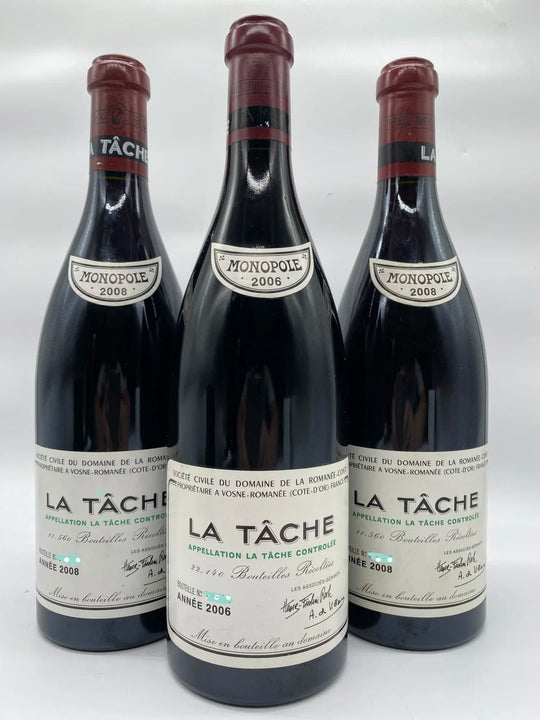
- DRC Échezeaux-guide comparison: La Tâche and Monopole Scarcity—Liquidity in the Fine-Wine Market — compares different DRC wines in the secondary market.
- DRC regional reference: The Many Terroirs of Échezeaux—Producers, Sites and Market Demand — provides another cross-check for a Burgundy valuation.
- Échezeaux-guide valuation case study: A Mid-Levels DRC La Tâche 1999 Changes Hands — adds transaction context to the market discussion.
Send label, vintage, volume, capsule and fill-level photos. Di Bao Wine will review the visible condition and current demand.