Burgundy vs Bordeaux: 2026 Fine-Wine Liquidity Outlook
The source describes gradual improvement in the fine-wine market in early 2026 after a three-year correction. It cites 97% in a wealth-management s...

In This Article
The source describes gradual improvement in the global fine-wine market in early 2026 after a three-year correction from the late-2022 peak. It characterises the period as the longest adjustment in recent market history and says transaction data indicated a shift from liquidity-led trading toward more selective value assessment. Those claims require dated index evidence.
For collectors considering a cellar reorganisation, sale or investment review, the source presents 2026 as a possible turning point. It cites 97% of surveyed wealth-management organisations expecting stronger demand and frames fine wine as an inflation hedge. The survey details are not supplied, and such protection is not assured; the useful comparison here is how Burgundy and Bordeaux differ in secondary-market liquidity and valuation.
Two Liquidity Models: Bordeaux Market Depth and Burgundy Scarcity
When reviewing a cellar for sale, liquidity affects both the likely time to transact and the bid-offer spread. It still varies by producer, vintage, format, condition and provenance.
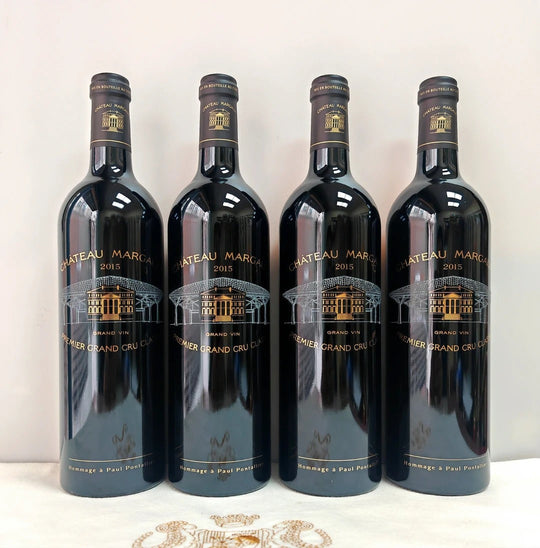
Bordeaux: The Backbone of Liquidity in the Secondary Market Bordeaux First Growths have long served as market benchmarks. The source links their market depth, transparent pricing and relatively stable production—including Château Lafite Rothschild at about 15,000 to 25,000 cases per year—to the ability to absorb larger trades. It says Bordeaux's share of transaction value reached 47% in early 2026 and identifies Château Lafite Rothschild as accounting for 4.72% of transaction value in the source dataset. Those shares need a dated method and do not make a bottle automatically liquid. The source also says Château Mouton Rothschild—specifically its Mouton art labels—can coincide with an approximately 5% source-reported price movement around a new label release. The article supplies no event study, so this is not a trading rule.

Burgundy: Veblen Effect and Precise Pricing Compared with Bordeaux's scale, the source links Burgundy's value to scarcity. For example, Domaine de la Romanée-Conti(DRC) produces about 450 to 500 cases a year from its flagship monopole, according to the source. It cites the 2026 auction record for a 1945 DRC Romanée-Conti at US$812,500 (about HK$6,337,500). That exceptional bottle is not a benchmark for other vintages. Within Burgundy, leading Grand Cru wines including DRC and Leroy remain scarce; leading white Burgundy also remains difficult to source, while some mid-tier wines that carried large 2021-2022 premiums face weaker liquidity.
Source-Period Liquidity and Price References, Converted to HKD
The following source table says it draws on the Liv-ex 2025/2026 Power 100 and converts 12-bottle 750 ml case references at £1 ≈ HK$9.8. The observation dates and row-level sources are not included, so every figure is historical context rather than a current bid.
Table 1: 2026 Secondary Market Reference Prices for the Top 100 Bordeaux Brands
| Premium Bordeaux Brands | 2025 Overall Ranking | Liquidity Characteristics | Source-Listed Amount (HKD Header; '$' Symbol Retained) |
|---|---|---|---|
| Château Cheval Blanc (Cheval Blanc) | 1 | Pragmatic pricing, strong demand | $40,474 |
| Château Mouton Rothschild (Mouton Rothschild) | 10 | Artistic labels, highly popular among Asian collectors | $39,307 |
| Château Lafite Rothschild | 19 | Highest transaction value in the source table; comparatively liquid | $38,612 |
| Château d'Yquem | 8 | Leading sweet-wine estate; source reports institutional interest | $36,260 |
| Château Haut-Brion | 7 | High critical standing; source presents relative value | $32,193 |
| Pétrus (Petrus) | 16 | Scarce Right Bank wine; high source-period price | $314,923 |
Source: Liv-ex Power 100. The stated prices are source-period medians; any current buyback price depends on vintage, format, condition and provenance.

Table 2: 2026 Burgundy Premium Brand Secondary Market Reference Prices
| Burgundy Premium Brand | 2025 Overall Ranking | Liquidity Characteristics | Source-Listed Amount per 12-Bottle Case (HKD Header; '$' Symbol Retained) |
|---|---|---|---|
| Domaine de la Romanée-Conti (DRC) | 19 | Exceptionally scarce; source table shows seven-figure HKD demand | $383,248 |
| Joseph Drouhin | 4 | Source reports comparatively stable pricing | $23,128 |
| Domaine Leflaive | 3 | Leading white Burgundy; source presents defensive characteristics | $16,650 |
Source: Liv-ex Power 100. Burgundy prices vary materially by climat, producer and production volume; these source-period figures are not current bids.
Bottle-Review Perspective: Core Evidence for a Cellar Valuation
A bottle review should not rely on historical vintage scores alone. In the source's 2026 framework, condition and provenance are central evidence, but no single factor creates an automatic premium.
1. Liquid Level (Ullage) and Physical Condition: The Countdown to Oxidation Ullage is a visible condition indicator, not a complete storage history.
-
Bordeaux Bottles (such as Château Lafite Rothschild): For Bordeaux bottles such as Château Lafite Rothschild, the source treats base-of-neck fill as very strong condition evidence. It says a 1982 bottle at mid shoulder may reflect cork ageing or heat exposure and cites a possible 30%-50% discount. That range is not an automatic schedule; age, seepage, provenance and the rest of the bottle must be assessed together.

-
Burgundy Bottles (such as DRC): Burgundy bottles have a different shoulder profile, so ullage is often measured from the bottom of the cork. The source calls less than 2 cm excellent and says 3-5 cm may be acceptable after more than 30 years but concerning in a young wine. These are review cues, not a stand-alone diagnosis.

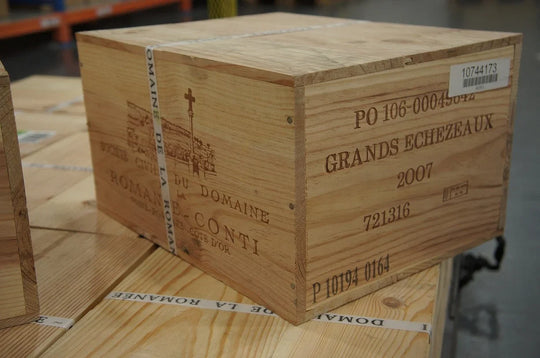
2. Original Wooden Case (OWC) and Provenance The source assigns complete provenance a 10%-20% 'certainty premium'. No dated dataset is supplied, so the range cannot be applied automatically. Packaging such as the Original Wooden Case (OWC) or an intact banded case can support provenance and protect labels, but neither proves storage quality, authenticity, or that bottles were never moved.
3. The Chain Reaction of Vintage and Climate Economics The source links the structure and ratings of Bordeaux First Growth vintages such as 1982, 2000, 2005, 2009 and 2010 to continued liquidity. It also reports that Bordeaux's 2025 harvest was 25% below the prior ten-year average and the smallest since 1991, while some Burgundy white-wine sites lost as much as 80% of production. The article does not supply row-level evidence for those figures. Lower production may affect supply in 2026 and later, but it does not inevitably raise the buyback price of already bottled physical vintages.
Source's 2026 High-Net-Worth Allocation Thesis
The source was written around a 15% U.S. tariff assumption for European wine. That assumption was affected by the U.S. Supreme Court's 20 February 2026 holding that IEEPA does not authorize the challenged tariffs; the applicable legal basis and current rate must therefore be checked for the relevant date. The source separately links UK tax changes and 'Wexit' to interest in portable tangible assets, but that remains market commentary rather than proof of demand for fine wine.
The source describes younger collectors and Gen Z as favouring 'drink less, drink better', sustainability, biodynamics and narrative value. It provides no dataset for the claim that these traits increase liquidity, so they are preference context rather than a valuation rule.
Dibao Wine—A Partner for Reviewing Fine-Wine Collections
Fine wine is sometimes called an 'illiquid liquid'. A professional channel and dated market evidence can help owners review Bordeaux First Growths, DRC, Leroy and other scarce wines, but they do not ensure fast conversion to cash or a high-price outcome. Dibao Wine can provide a bottle-specific assessment.
A review can cover:
- Pricing references: Dated 2026 Liv-ex and auction references can inform a Hong Kong-dollar (HKD) offer after the vintage, format, condition and provenance are checked.
- Professional appraisal: The original wooden case (OWC), label, capsule, fill level and provenance can be assessed objectively; no fixed premium is promised.
- Settlement arrangements: Payment method, privacy, timing and handover arrangements are agreed after inspection. Availability and settlement timing are case-specific.
Burgundy market cross-reference
- Further reading from the Burgundy-Bordeaux article: Dibao Wine case—a Hong Kong collector reorganises a Bordeaux First Growth cellar —Adds a practical Bordeaux case for comparison with Burgundy's vintage, condition and liquidity factors.
- Related market analysis: 2026 fine-wine outlook after a three-year correction —Places Burgundy and Bordeaux in their different regional liquidity and valuation contexts.
- Related Burgundy analysis: Grand Cru market timing, condition and evidence —Provides a second source-based reference for reviewing a Burgundy collection.
- Case reference from the Burgundy-Bordeaux article: a transfer of DRC Romanée-Conti and other rare wines —Adds a practical transaction narrative to the market discussion.
Send label, vintage, volume, capsule and fill-level photos. Di Bao Wine will review the visible condition and current demand.