La Tâche Vintage References and Bottle Evidence in 2026
La Tâche is one of Domaine de la Romanée-Conti’s two monopole grand crus. La Tâche is presented in the source as resilient in 2026 after a 2023–202...

In This Article
In the highest tier of fine wine, La Tâche , from Domaine de la Romanée-Conti (DRC), holds a distinctive place. It is one of the domaine’s two monopole grand crus. The source presents it as both a celebrated wine and a relatively resilient secondary-market asset; that description does not establish future value.
Against changing interest-rate conditions and a source-described recovery after the 2023–2025 fine-wine correction, this 2026 guide asks: what evidence supports a sale or bottle review now? This 2026 guide from Dibao Wine reviews La Tâche vintage references, 2026 market claims and bottle-specific evidence.
1. La Tâche: Scarcity and the Source’s Stability Thesis
The source attributes La Tâche’s persistent position in fine-wine buyback references to its terroir, reputation and limited production. It gives the vineyard area as about 6 hectares, compared with about 1.8 hectares for Romanée-Conti, and describes annual output as only several thousand cases. No production source or allocation data is cited.
The source calls La Tâche a blue-chip fine wine and says a 2025 Liv-ex classification placed it second by value, behind Romanée-Conti. It also cites an average 12-bottle trading price of £45,061 from July 2024 to June 2025. The edition, methodology, trade count, condition mix and fees are not supplied. HKD 450,610 On that basis, the source describes La Tâche as one of the more liquid names in the Hong Kong fine-wine market . Bottle-specific liquidity still depends on vintage, format, condition, provenance, price and current demand.

2. The Source’s 2026 Turning-Point Thesis
Any view of current value should be tied to a dated market period and exact evidence.
- Correction after the peak: the source says the fine-wine market reached a high in 2022 and then corrected by about 23%–30% over two years. It identifies no complete index series or segment weighting.
- Possible return of liquidity: the source says that, by late 2025, Liv-ex bids exceeded offers for the first time in the observed period. Without the dataset, dates, wines and executable volumes, this is directional context rather than proof of a broad recovery.
- Concentration in recognised names: the source says early recovery interest tended to favour highly recognised producers such as DRC and that La Tâche traded more frequently than some second- and third-tier Burgundy names from late 2025 into early 2026. It supplies no comparative trade counts.
For owners of 1990, 2005 or 2010 , the source argues that current levels may be below the 2022 peak but could offer workable liquidity. That is a dated opinion, not a forecast or a promise of sale; the exact bottle and current bids must be checked.

3. Core Vintages: Source Ratings and Buyback References
To support a bottle-by-bottle review, Dibao Wine compiled the following source ratings and 2026 price references. They are dated context, not current offers.
Table 1: La Tâche Core-Vintage References in the Source (2026)
| Vintage | Source Rating (WA/RP) | Source Market-Interest Label | Source Retail Reference per Bottle (HKD) | Source Dibao Wine Buyback Reference per Bottle (HKD) | Source Sale-Period Description |
|---|---|---|---|---|---|
| 1990 | 100 points | Very high | HKD 65,000 - 75,000 | HKD 52,000 - 62,000 | Initial Photograph Review |
| 1996 | 95+ points | High | HKD 42,000 - 48,000 | HKD 34,000 - 39,000 | Settlement Terms Confirmed after Inspection |
| 2000 | 98 points | Medium-high | HKD 45,000 - 52,000 | HKD 36,000 - 42,000 | Source Suggests a Shorter Sale Period |
| 2005 | 100 points | Very high | HKD 58,000 - 68,000 | HKD 48,000 - 56,000 | Benchmark Wine in the Source |
| 2009 | 99 points | High | HKD 48,000 - 55,000 | HKD 38,000 - 45,000 | Source Describes Stable Demand |
| 2010 | 100 points | Very high | HKD 55,000 - 62,000 | HKD 44,000 - 51,000 | Long-Term Benchmark in the Source |
| 2015 | 98 points | High | HKD 45,000 - 50,000 | HKD 36,000 - 41,000 | Source Describes High Liquidity |
| 2018 | 99 points | Medium-high | HKD 42,000 - 48,000 | HKD 34,000 - 39,000 | Source Describes a Stable Rebound |
Note: the source converts prices at approximately £1 = HKD 10. Actual fine-wine buyback references depend on the exact vintage, format, fill or ullage, label, capsule, seepage, original wooden case (OWC), provenance, inspection date and fees.

4. Bottle Review: Evidence That May Support a Quote
In a pre-owned fine-wine review , the source identifies four main areas for a La Tâche assessment:
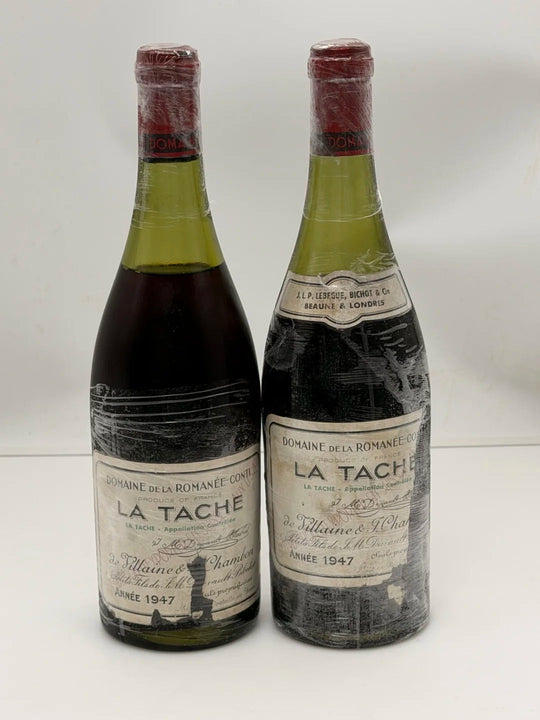
- Fill Level (Ullage) and Closure Presentation: for post-2000 bottles, the source expects a high fill, typically into neck. It says seepage or a loose capsule may reduce a quote by more than 15%, but provides no matched deduction schedule.
- Label Condition: minor cellar wear can occur on older Burgundy bottles, while extensive insect damage, oil staining or tears may affect presentation and buyer demand. Label condition alone does not establish authenticity or internal wine quality.
- Authentication and Identity Checks: inspect the glass, label print, capsule, cork presentation, codes and other available security features. These checks can identify inconsistencies but do not establish authenticity without sufficient provenance and expert examination.
-
Provenance: the source says records from a Hong Kong bonded warehouse, an HKQAA-certified cellar or an original purchase receipt may support a 5%–10% premium. No matched transaction set is supplied, so documentation should be assessed for the exact bottle.

5. Is This a Value Peak? A Source View, Not a Forecast
The source offers the following dated opinions. They are not investment advice and do not establish future outcomes:
- For 1990 or 2005: the source describes scarcity and maturity as supportive and calls current buyback references close to a value peak. It supplies no complete transaction series, remaining-bottle estimate or proof that a peak has been reached.
- For 2012–2018: the source describes a recovery from lower levels and suggests possible modest appreciation over 1-2 years. Future prices are uncertain; current bids, storage, condition, fees and liquidity should be checked before any decision.
-
Portfolio context: the source frames 2026 as a year to review cellar composition. Selling one vintage to acquire another changes exposure and involves price, authenticity, storage, fees and liquidity risks; it is not automatically advantageous.

6. Arranging a Bottle-Specific Review
For a high-value wine handover in Hong Kong, identity, inspection, privacy, payment and transport arrangements should be agreed in advance. Dibao Wine describes the following service features:
- Dated price references: the source says quotes consider Liv-ex, Sotheby’s and other trading-platform references from the date of review. The exact comparable set, condition, fees and executable bids must be confirmed.
- Inspection and settlement arrangements: an on-site inspection may be arranged if both parties agree; availability, payment method and handover timing are confirmed for the exact collection.
- Privacy arrangements: the parties should confirm what information is collected, who can access it, how it is stored and the handover process. A private sale may avoid some auction procedures, but costs and protections vary.
Related DRC and Burgundy Reading
- Related case: a Mid-Levels handover of DRC La Tâche 1999 —additional context on vintage, bottle condition and buyer demand.
- Related La Tâche case: six bottles, including the rare 1942 vintage —a case-specific comparison of vintages and condition in the secondary market.
- Related DRC guide: Échézeaux and Grands Échézeaux collection and sale considerations —a cross-reference for Burgundy bottle reviews.
- Related La Tâche guide: source tasting notes for 2015 and 2021 —additional context behind the source’s market claims.
Send label, vintage, volume, capsule and fill-level photos. Di Bao Wine will review the visible condition and current demand.