Pétrus vs Lafite: Secondary-Market Value, Condition and Price Guide
Château Lafite Rothschild on the Left Bank and Pétrus on the Right Bank are two Bordeaux legends with very different supply and liquidity profiles....

In This Article
At the summit of Bordeaux fine wine, the Left Bank's Lafite(Château Lafite Rothschild) and the Right Bank's Petrus represent two distinct legends. Collectors value both for their history and reputation, but neither wine is immune to changes in price, liquidity or condition.
Dibao Wine has years of experience assessing mature wine. Collectors often ask when to sell and how to value a bottle. After a three-year correction, the market entering 2026 was at a delicate turning point. This comparison examines how Pétrus and Lafite differ in production, liquidity, authentication and source-reported HKD prices. It provides valuation context rather than a promise about the best time to sell.

1. Brand Positioning: Liquidity Versus Scarcity
The Chinese source cites 2024-2025 US search data in which searches for Lafite rose from about 400,000 to nearly 900,000 in one year, placing it first, while Pétrus moved into second place. The packet does not identify the platform or method, so these figures are retained as source-reported interest signals, not proof of global transaction rankings or inflation protection.
The core difference between Lafite and Pétrus begins with production scale and supply:
-
Lafite — a widely traded benchmark: Château Lafite Rothschild is in Pauillac on the Left Bank. Its approximately 112 hectares are planted mainly to Cabernet Sauvignon, and the source places annual production at 15,000-20,000 cases. That larger supply supports broad price visibility and regular secondary-market trading, although an individual bottle's liquidity still depends on vintage, format, provenance and condition.

-
Pétrus — scarcity at a different scale: Pétrus is in Pomerol on the Right Bank. Its 11.4-hectare vineyard is associated with iron-rich blue clay; the source describes the wine as 100% Merlot with no second wine and production of about 2,500 cases a year, less than one-eighth of Lafite's stated output. That scarcity can support a high bottle price, but does not remove market risk.

Table 1. Lafite and Pétrus: Production and Liquidity
| Metric | Château Lafite Rothschild | Pétrus |
|---|---|---|
| Appellation | Pauillac — Left Bank | Pomerol — Right Bank |
| Principal grape | Cabernet Sauvignon-led | 100% Merlot |
| Vineyard area | 112 hectares | 11.4 hectares |
| Estimated annual production | 15,000-20,000 cases | About 2,500 cases |
| 2025 average case price | GBP 3,940 (about HKD 39,400) | GBP 32,135 (about HKD 321,350) |
| Market liquidity | Very high (source ranks it No. 1 by global turnover) | Moderate (constrained by very low output) |
| Source's investment rationale | Liquidity and global brand recognition | Scarcity and trophy-asset demand |
Note: the source converts these figures at approximately GBP 1 = HKD 10.
2. Mature-Wine Assessment: Authentication, Fill Level and Condition
Authentication and condition are central to the price of a secondary-market bottle. Dibao Wine checks different features when assessing these Left- and Right-Bank wines:
1. Lafite: Security and Bottle Features Because Lafite is frequently counterfeited, an assessor should examine the bottle, label, capsule and security features together with provenance:
- Bottle embossing: Bottles from 1996 onward carry distinctive glass markings; the 2000 vintage has a special year engraving around the bottle.
- Security system: Château Lafite Rothschild introduced Prooftag security from the 2012 vintage. The seal can be checked against the estate's authentication process. The Chinese source says a torn tag may lead to a 20%-40% discount or rejection; because it supplies no dated dataset, that range should not be applied automatically to a bottle.

2. Pétrus: Condition and Mature-Wine Logic Pétrus assessment relies heavily on provenance, bottle construction and precise ullage inspection rather than one electronic feature.
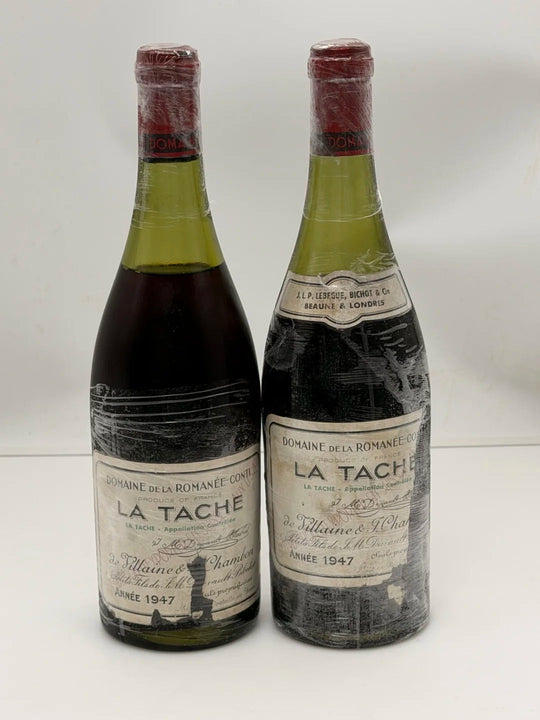
- Fill level and cork: The source says a one-centimetre change in fill may alter a quote by thousands of Hong Kong dollars. For pre-1980 Pétrus, an into-neck level is described as collector grade, while a shoulder level may suggest cork deterioration or oxidation and can reduce the offer. The actual effect requires bottle-by-bottle inspection.
- Label condition: On mature vintages such as 1989 and 1990, light cellar mould may be consistent with humid storage. It is not proof of good provenance by itself; seal integrity, fill, storage history and the rest of the bottle must also be assessed.

Table 2. Core Secondary-Market Checks
| Check | Lafite focus | Pétrus focus |
|---|---|---|
| Ullage | Modern bottles normally expected at neck level | High-value mature bottles closely checked for into-neck fill |
| Security features | The source specifies a 13-digit Prooftag code from 2012; verify the exact bottle through the estate's current process | Check consistency between cork/capsule markings and the label vintage |
| Label | Print relief, paper fibres and the nature of any staining | Distinguish cellar mould from water damage |
| Original wooden case (OWC) | The source claims an OWC may add 10-15%; this is not an automatic pricing rule | Single bottles can remain valuable because supply is extremely limited |
3. Secondary-Market Prices and Auction Context
Perfect critic scores, including 100-point ratings from Robert Parker, can affect collector demand, but they do not determine a transaction price on their own. The source says Pétrus was the world's highest-turnover wine brand in November, the 11th month of 2025, and describes this as a recovery signal; because no underlying table is supplied, the statement remains source-attributed rather than a current ranking.
To apply the Pétrus and Lafite checks in this comparison to an actual collection, record the vintage, bottle count, fill level and label condition, then use WhatsApp 96737259 to request a preliminary valuation.
4. Hong Kong's Secondary-Market Network
5. 2026: Compare Selling with Continued Ownership
Conclusion: Let Condition and Executable Bids Define Market Value
Further Reading on Bordeaux Collections
- Related case study: Lafite 2005 and Pétrus 2012 Leave a Mid-Levels Cellar — adds vintage, condition and buyer-demand context for Lafite.
- Pétrus article's Lafite comparison: The Distinctive '8' Mark on Château Lafite Rothschild 2008 — compares bottle-specific Lafite details in the secondary market.
- Pétrus article's regional reference: Selling OWC and Loose-Bottle Lafite Before a New Arrival — provides another cross-check for a Bordeaux valuation.
- Pétrus article's valuation guide: Selling Unopened Château Lafite Rothschild — adds market logic to the case studies.
Send label, vintage, volume, capsule and fill-level photos. Di Bao Wine will review the visible condition and current demand.